






What's Happening?
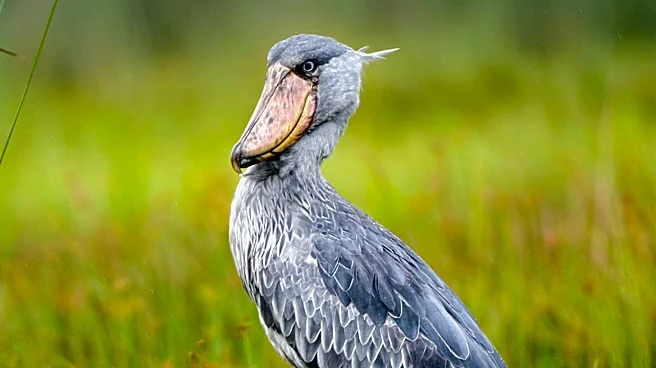
The shoebill bird, native to Uganda's swamps, is attracting tourists due to its unique prehistoric appearance. Standing four feet tall with a hooked, razor-edged bill, the shoebill resembles a creature from the age of dinosaurs. Despite its conspicuous
nature, population estimates vary, with BirdLife International citing 3,300 to 5,300 mature individuals, while African Parks estimates no more than 8,000. The species faces threats from wetland drainage, disturbance, and the live bird trade. Conservation efforts, such as those by NatureUganda, focus on building ecotourism to protect the shoebill, emphasizing its economic value alive rather than dead.
Why It's Important?
The shoebill's presence in Uganda highlights the potential of ecotourism to drive economic growth while conserving unique wildlife. By attracting tourists, the shoebill provides financial incentives for local communities to protect their natural habitats. This approach not only aids in conservation but also supports local economies, offering a sustainable model for wildlife protection. The decline in shoebill populations underscores the need for continued conservation efforts, which can be bolstered by ecotourism initiatives that emphasize the bird's rarity and appeal.
What's Next?
Conservationists and local communities are expected to continue promoting ecotourism as a means to protect the shoebill and its habitat. Efforts may include enhancing visitor experiences and increasing awareness about the importance of preserving Uganda's unique wildlife. The success of these initiatives could lead to increased funding and support for conservation projects, potentially reversing the decline in shoebill populations.