



What's Happening?
The United States military executed a series of large-scale strikes against ISIS targets in Syria as part of an ongoing operation named 'Operation Hawkeye Strike.' This operation was initiated in response to a deadly attack by an ISIS gunman in Palmyra,
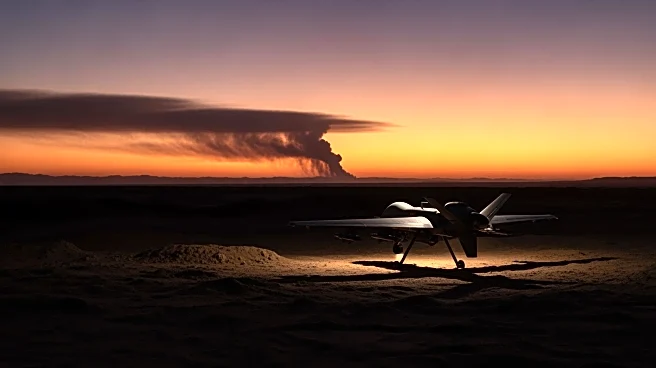
Syria, which resulted in the deaths of two U.S. soldiers and a civilian interpreter. The soldiers, identified as Sgt. Edgar Brian Torres Tovar and Sgt. William Nathaniel Howard, were members of the Iowa National Guard. The operation involved over 20 aircraft, including F-15Es, A-10s, AC-130Js, MQ-9s, and Jordanian F-16s, which fired more than 90 precision munitions at over 35 targets. The U.S. Central Command emphasized the operation's intent to deliver a significant blow to ISIS remnants in Syria, maintaining a strong message of retaliation against threats to U.S. forces.
Why It's Important?
This military action underscores the U.S.'s ongoing commitment to combating ISIS and protecting its forces in the Middle East. The operation highlights the strategic importance of maintaining pressure on ISIS to prevent the resurgence of its influence in the region. The strikes serve as a deterrent against future attacks on U.S. personnel and demonstrate the U.S.'s capability to conduct precise and coordinated military operations. The involvement of the Iowa National Guard also reflects the broader national effort and the sacrifices made by service members from various states in the fight against terrorism.
What's Next?
The continuation of Operation Hawkeye Strike suggests that further military actions may be anticipated as the U.S. seeks to dismantle remaining ISIS networks in Syria. The operation's success could influence future U.S. military strategies in the region and potentially lead to increased collaboration with international partners. The U.S. military's presence in Syria is likely to persist as part of its broader mission to stabilize the region and prevent the re-emergence of ISIS.