



What's Happening?
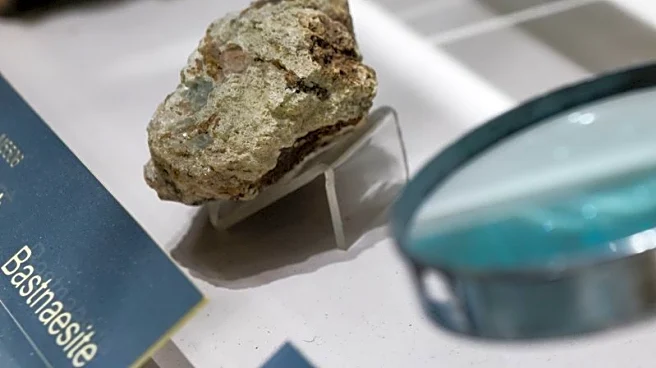
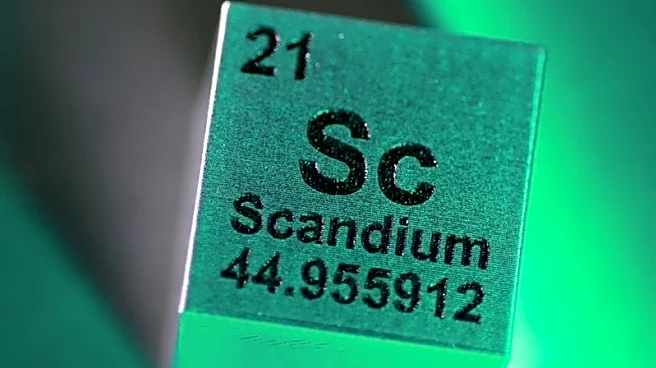
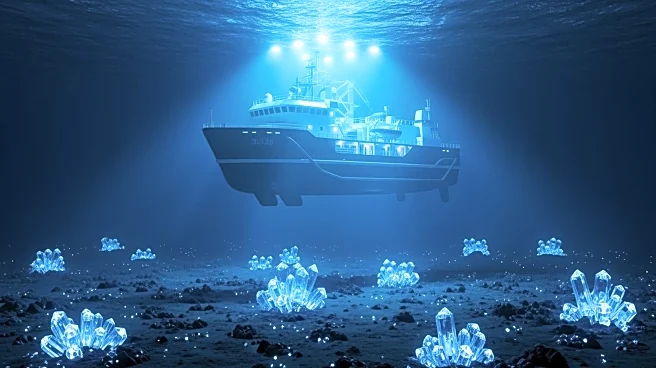
Japan's Agency for Marine-Earth Science and Technology (JAMSTEC) has launched a trial expedition to recover rare earth elements from the seabed near Minamitori Island. The research drillship Chikyu departed from Shizuoka to explore a rich deposit of rare earth elements,
potentially measured in millions of tonnes. This initiative aims to secure a domestic supply of these critical materials, which are essential for high-tech manufacturing. The trial involves innovative ultradeepwater drilling technology, as the extraction process requires handling abrasive, viscous mud from the seabed.
Why It's Important?
The trial voyage represents a strategic move by Japan to reduce its reliance on imported rare earth elements, primarily sourced from China. Securing a domestic supply could enhance Japan's national security and economic independence, particularly in the context of rising geopolitical tensions in East Asia. The successful extraction of rare earths could bolster Japan's high-tech industries, which rely on these materials for manufacturing electronics, renewable energy technologies, and defense systems. The initiative also highlights the potential of deep-sea mining as a new frontier for resource acquisition, though it raises environmental concerns.
Beyond the Headlines
The environmental implications of deep-sea mining are significant, as extracting materials from the seabed can disrupt marine ecosystems and habitats. The trial's success could lead to increased interest in subsea mining, prompting discussions on sustainable practices and regulatory frameworks. The project also underscores the technological advancements required for ultradeepwater drilling, which could have broader applications in other industries. As Japan moves forward with this initiative, balancing economic benefits with environmental stewardship will be crucial.