







What's Happening?
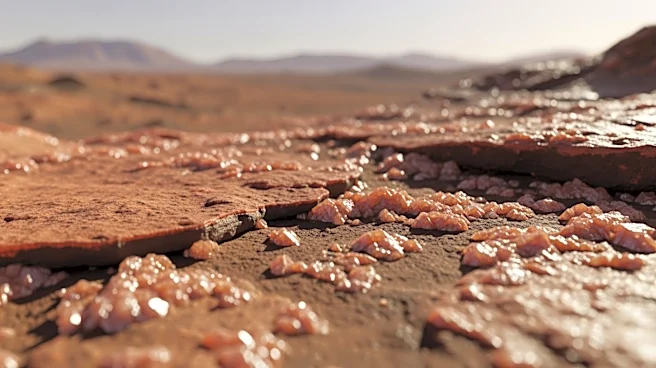
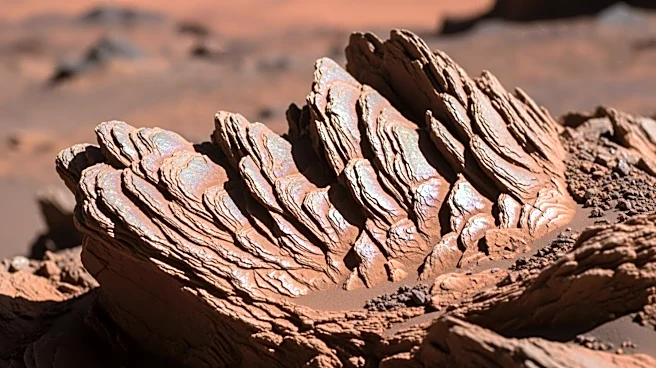
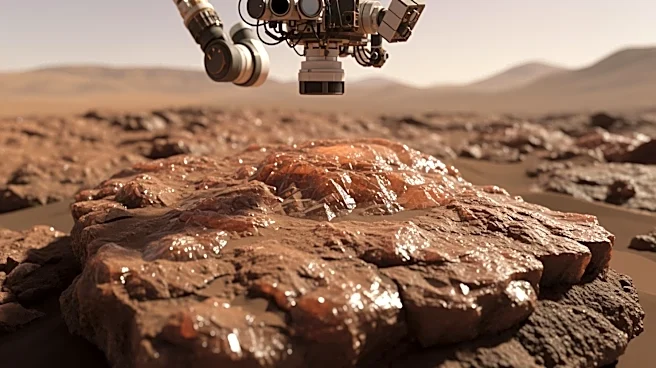
NASA's Curiosity Mars rover has discovered a diverse array of organic molecules on Mars, which are considered potential building blocks for life. The findings were made during a chemical experiment conducted in the Glen Torridon region, a site believed
to have once been favorable to life. Led by Amy Williams, Ph.D., from the University of Florida, the study identified over 20 chemicals, including a nitrogen-bearing molecule similar to DNA precursors and benzothiophene, a sulfurous compound often delivered by meteorites. These discoveries suggest that Mars' surface can preserve molecules indicative of ancient life, although distinguishing between life-originated and geologically formed compounds remains challenging.
Why It's Important?
The discovery of organic molecules on Mars is significant as it enhances the understanding of the planet's potential to support life. These findings could influence future Mars missions, including those aimed at returning rock samples to Earth for definitive analysis. The presence of complex organics preserved in Mars' subsurface holds promise for identifying life-related compounds, which could reshape scientific perspectives on extraterrestrial life and inform astrobiological research. The study also highlights the importance of Mars' clay minerals in preserving organic chemicals, offering insights into the planet's habitability.
What's Next?
Future missions, such as the Rosalind Franklin mission to Mars and the Dragonfly expedition to Saturn's moon Titan, plan to incorporate similar chemical tests to search for organic compounds. These missions aim to further explore the potential for life beyond Earth, using advanced technology to analyze organic matter. The promising results from Curiosity's experiment may guide the selection of sampling sites and methodologies for these upcoming missions, potentially leading to groundbreaking discoveries in astrobiology.
Beyond the Headlines
The ethical and scientific implications of discovering life-related compounds on Mars are profound. Such findings could challenge existing paradigms about life's uniqueness on Earth and prompt discussions on planetary protection and the ethical treatment of extraterrestrial environments. Additionally, the technological advancements required for these missions could drive innovation in space exploration and related fields, fostering international collaboration and investment in scientific research.