




What's Happening?
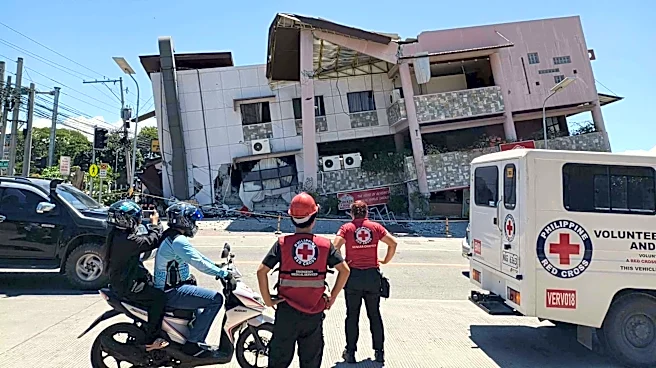
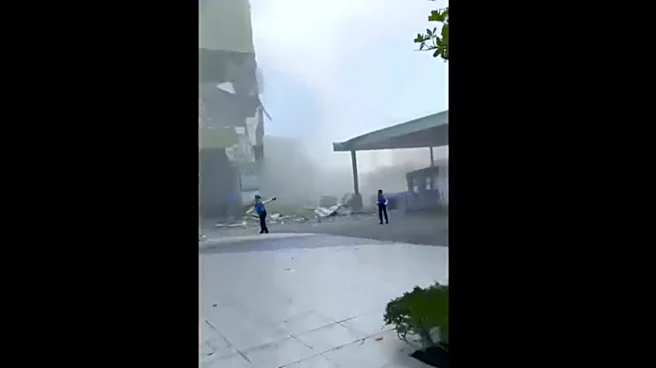
A powerful earthquake with a magnitude of 8.2 struck off the coast of Mindanao in the Philippines, leading to a tsunami advisory for several Japanese coastal areas. The Japan Meteorological Agency (JMA) issued the advisory for regions stretching from
Ibaraki Prefecture to Okinawa Prefecture. The quake occurred at approximately 8:37 a.m., and the JMA warned of possible tsunami waves up to 1 meter high. Evacuation orders were implemented in affected areas, and smaller tsunamis were observed at various locations, including a 20-centimeter wave on Chichijima in the Ogasawara Islands. The advisory was lifted later in the day as the immediate threat subsided. The Pacific Tsunami Warning Center also issued and later withdrew warnings for the Philippines and Malaysia.
Why It's Important?
The earthquake and subsequent tsunami advisory highlight the vulnerability of coastal regions in the Pacific to seismic activity. Japan, with its history of devastating tsunamis, remains on high alert for such natural disasters. The event underscores the importance of timely warnings and effective evacuation procedures to minimize potential loss of life and property damage. The response from Japanese authorities, including the establishment of an information liaison office and public safety measures, reflects the country's preparedness for such emergencies. The incident also serves as a reminder of the interconnectedness of seismic events across the Pacific, affecting multiple countries and requiring coordinated international responses.
What's Next?
In the aftermath of the earthquake, Japanese authorities will likely review and assess their emergency response protocols to ensure readiness for future events. The incident may prompt further research into seismic activity in the region, particularly around Mindanao, which has experienced frequent large earthquakes. Additionally, the event could lead to increased collaboration between countries in the Pacific Ring of Fire to enhance early warning systems and disaster preparedness strategies. The Philippine government, under President Ferdinand Marcos Jr., has already directed relevant agencies to take immediate action, which may include infrastructure assessments and community support initiatives.