






What's Happening?
The Department of Energy (DOE) has announced $1.9 billion in federal grants to support 31 projects across 26 states aimed at modernizing the U.S. power grid. These projects are expected to add 23 gigawatts (GW) of capacity, enough to power 16 million
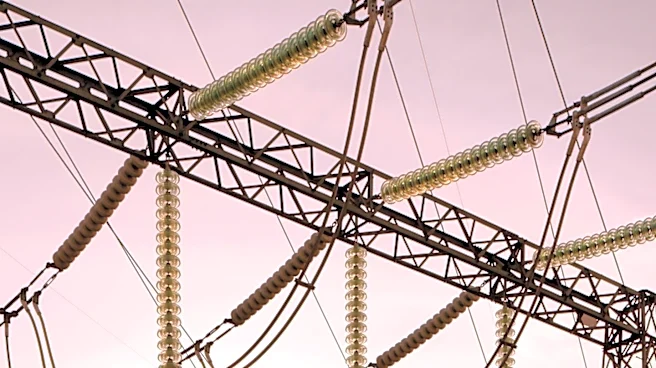
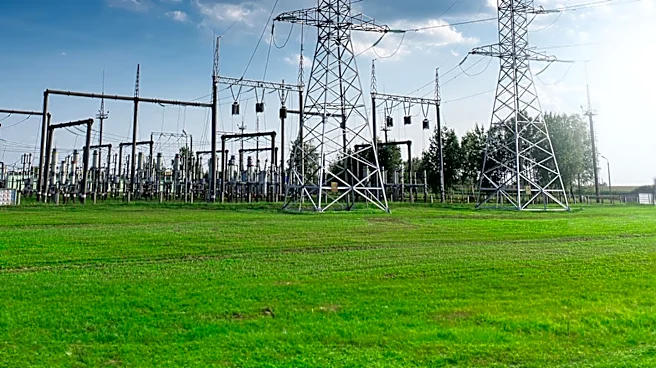
homes, by reconductoring or rebuilding transmission lines and deploying Grid-Enhancing Technologies (GETs) over nearly 21,000 miles. The initiative, known as Speed to Power through Accelerated Reconductoring and other Key Advanced Transmission Technology Upgrades (SPARK), was launched in March to address urgent grid upgrades. These grants are enabled by the bipartisan Infrastructure Investment and Jobs Act (IIJA) passed in 2021. In addition to federal funding, the projects will receive $3.25 billion in recipient cost-share funding. Recipients range from small utilities to large entities like Duke Energy and the New York Power Authority.
Why It's Important?
This significant investment in grid infrastructure is crucial for enhancing the reliability and resilience of the U.S. electricity supply. By maximizing existing rights-of-way and deploying GETs, the projects aim to alleviate congestion bottlenecks, reduce operating costs for utilities, and lower consumer electricity bills for approximately 100 million Americans. The bipartisan support for these initiatives, as noted by Leah Rubin Shen of Advanced Energy United, indicates a broad consensus on the necessity of grid modernization. The focus on accelerating project timelines and utilizing advanced technologies like reconductoring and GETs represents a strategic shift towards more efficient and cost-effective grid upgrades, avoiding expensive greenfield construction. This investment is vital for meeting surging electricity demand and integrating more renewable energy sources into the grid.
What's Next?
The 31 funded projects will now move forward with implementation, with a focus on bringing new capacity online quickly. The DOE prioritized projects with rapid deployment potential, suggesting that tangible improvements to grid reliability and capacity could be seen in the near future. State lawmakers are increasingly considering mandating electric utilities to evaluate advanced transmission technologies (ATTs), including GETs, in their upgrade plans, following the lead of states like Virginia. This trend could lead to broader adoption of these technologies nationwide. The success of these initial projects under the SPARK initiative will likely inform future federal funding decisions and policy developments related to grid modernization and resilience.
Beyond the Headlines
The bipartisan nature of the support for grid modernization highlights a rare area of consensus in U.S. politics, underscoring the critical importance of infrastructure to national well-being and economic stability. The emphasis on GETs and reconductoring signifies a shift towards optimizing existing infrastructure rather than solely focusing on new construction, which can be more environmentally impactful and time-consuming. This approach could set a precedent for future infrastructure projects, promoting efficiency and sustainability. Furthermore, the involvement of both large and small utilities in these projects demonstrates a comprehensive strategy to address grid challenges across diverse regions and operational scales, ensuring that the benefits of modernization are widely distributed. This investment also indirectly supports the transition to a cleaner energy economy by creating a more robust grid capable of handling intermittent renewable energy sources.