
What's Happening?
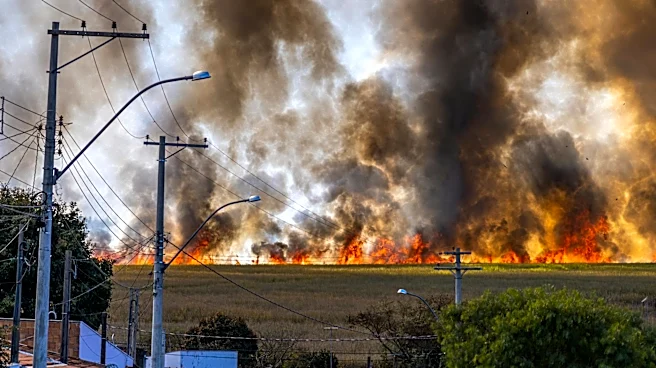
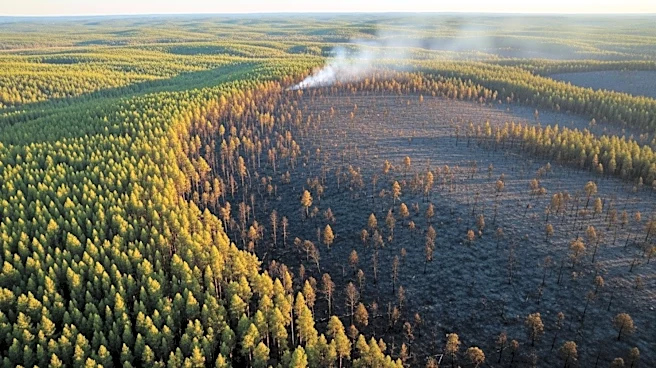
A study led by Amirhossein Montazeri at Boise State University has found that while the number of wildfires in the Western United States has decreased by 31% between 1992 and 2020, the acreage burned has increased
by 40%. This paradox is attributed to human-caused climate change, which has led to warmer and drier conditions that promote rapid fire growth. The study also notes a significant increase in large and very large fires, while smaller fires have declined. The findings suggest that awareness and prevention campaigns may be reducing the number of fire starts, but climate change continues to exacerbate fire intensity.
Why It's Important?
The study highlights the complex dynamics of wildfire management in the context of climate change. While prevention efforts may be reducing the number of fires, the increased intensity and size of fires pose new challenges for land managers and policymakers. Understanding the thresholds for fire growth can aid in developing strategies for prescribed burns and fire suppression. The findings underscore the need for continued investment in climate change mitigation and adaptation strategies to protect communities and ecosystems from the growing threat of wildfires.