



What's Happening?
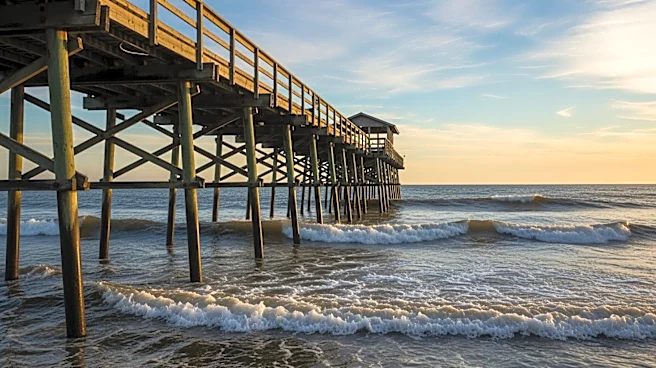
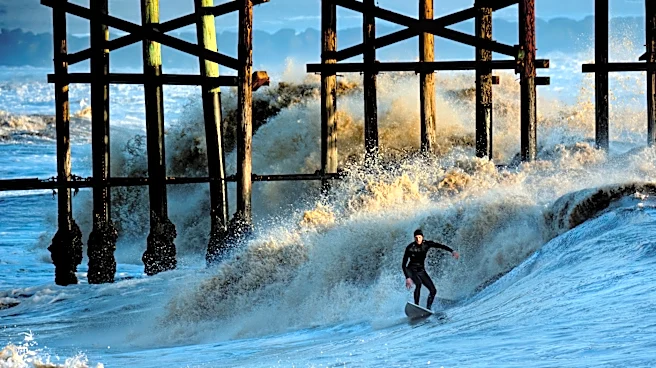
The Pacifica Municipal Pier, a notable structure in the small beach city south of San Francisco, has been closed due to significant structural damage. City workers discovered cracks running through the pier, with concrete chunks falling into the ocean,
prompting immediate closure for safety assessments. This incident is part of a broader pattern of coastal infrastructure in California suffering from the effects of rising sea levels and harsh marine conditions. The pier, which has a history of structural issues, was previously partially closed in 2021 and 2023 due to similar damage. The current closure follows a 2025 engineering report that highlighted several sections of the pier in poor condition, recommending closure before severe weather events. The pier's deterioration is emblematic of the challenges faced by coastal structures built in the early 1900s, which were not designed to withstand the current and projected environmental stresses.
Why It's Important?
The closure of the Pacifica Municipal Pier underscores the urgent need for addressing the vulnerabilities of coastal infrastructure in the face of climate change. Rising sea levels and increased storm activity pose significant threats to structures along the California coast, necessitating costly repairs and upgrades. The situation highlights the broader implications of climate change on public safety, economic stability, and cultural heritage. As sea levels continue to rise, local governments are compelled to plan for long-term resilience, balancing the preservation of historical structures with the need for modern, sustainable solutions. The financial burden of maintaining and upgrading these structures is substantial, with estimates for the Pacifica Pier alone reaching $19 million. This scenario reflects a growing challenge for coastal communities nationwide, as they grapple with the realities of climate change and the need for proactive adaptation strategies.
What's Next?
The immediate next step involves a thorough safety assessment by structural engineers to determine the extent of the damage to the Pacifica Pier and the feasibility of repairs. Long-term, the city and state authorities must consider strategic planning for coastal infrastructure resilience, potentially involving significant investments in retrofitting or replacing vulnerable structures. The anticipated El Niño and ongoing marine heatwave conditions could exacerbate the situation, leading to more frequent and severe damage. Policymakers and environmental groups may need to engage in discussions about sustainable coastal development and the potential relocation of infrastructure away from vulnerable areas. The situation calls for a reevaluation of current building codes and the implementation of innovative engineering solutions to mitigate future risks.
Beyond the Headlines
The closure of the Pacifica Pier is a microcosm of the broader environmental and socio-economic challenges posed by climate change. It raises ethical questions about the responsibility of current generations to protect and preserve cultural landmarks for future generations. The situation also highlights the need for interdisciplinary collaboration between engineers, environmental scientists, policymakers, and community stakeholders to develop comprehensive strategies for climate adaptation. As sea levels rise, communities must confront difficult decisions about which structures to save, relocate, or abandon, balancing historical preservation with practical considerations of safety and sustainability. This event may serve as a catalyst for increased public awareness and advocacy for climate action, emphasizing the interconnectedness of environmental health and community well-being.