
What's Happening?
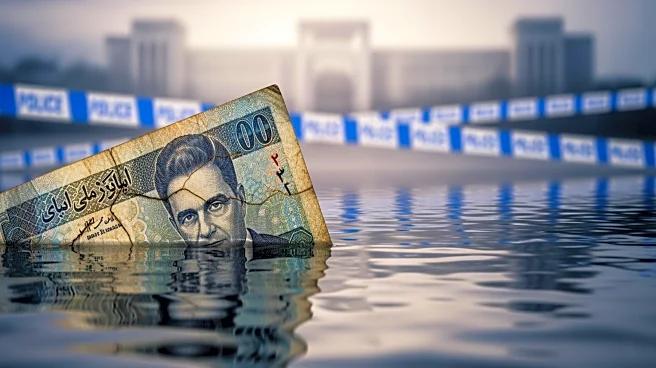
The governor of Iran's Central Bank, Mohammad Reza Farzin, has resigned following widespread protests in Tehran and other major cities due to the Iranian rial's significant devaluation against the U.S.
dollar. The currency's value plummeted to a record low, trading at 1.38 million rials to the dollar, down from 430,000 when Farzin took office in 2022. This depreciation has exacerbated inflation, with food prices rising by 72% and health items by 50% compared to the previous year. The protests, which saw traders and shopkeepers rallying and closing their businesses, were met with police using tear gas in some areas. The economic strain is compounded by recent gasoline price changes and anticipated tax increases in the upcoming Iranian new year.
Why It's Important?
The resignation of the Central Bank governor and the protests highlight the severe economic challenges facing Iran, which have been intensified by international sanctions and domestic policy decisions. The currency's devaluation and rising inflation are straining household budgets, leading to public unrest. This situation is further complicated by geopolitical tensions, including the potential for renewed conflict involving Iran, Israel, and possibly the United States. The economic instability could have broader implications for regional stability and international relations, particularly if it leads to further political unrest or changes in Iran's domestic or foreign policies.
What's Next?
The Iranian government may need to implement measures to stabilize the currency and address inflation to prevent further economic deterioration and public discontent. This could involve negotiating relief from international sanctions or adjusting domestic economic policies. The upcoming Iranian new year, with its planned tax increases, could be a critical period for the government to demonstrate its ability to manage the economy effectively. Additionally, international stakeholders will likely monitor the situation closely, given the potential for broader regional impacts.
Beyond the Headlines
The economic crisis in Iran underscores the complex interplay between domestic policies and international relations. The devaluation of the rial and the resulting inflation are not only economic issues but also reflect the broader geopolitical tensions and the impact of sanctions. The situation raises questions about the sustainability of Iran's current economic model and the potential need for structural reforms. It also highlights the challenges faced by countries under heavy international sanctions and the potential for economic issues to lead to political instability.