
What's Happening?
The European Union has approved a substantial loan package of 90 billion euros ($106 billion) to support Ukraine's economic and military needs over the next two years. This decision follows the resumption
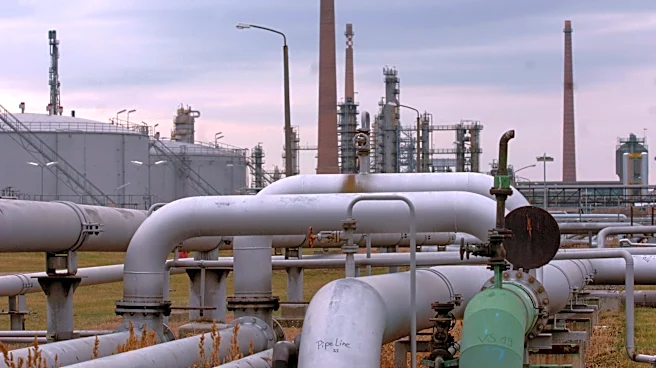
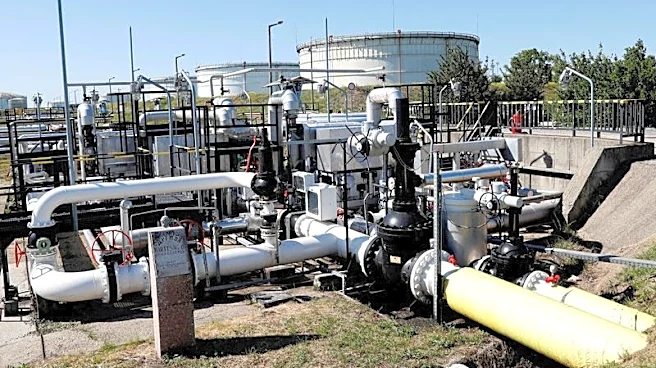
of Russian oil flow through a key pipeline to Hungary and Slovakia, which had been halted due to damage attributed to Russian drone attacks. The approval of the loan package was delayed due to opposition from Hungary and Slovakia, who were in a dispute with Ukraine over the halted oil deliveries. The resumption of oil flow through the Druzhba pipeline has resolved this deadlock, allowing the EU to move forward with the loan package. The EU also announced new sanctions against Russia, targeting its oil revenue and adding more entities to the sanctions list.
Why It's Important?
The approval of this loan package is crucial for Ukraine as it continues to face economic challenges and military threats from Russia. The financial support will help stabilize Ukraine's economy and bolster its defense capabilities. The resolution of the oil pipeline issue also highlights the complex geopolitical dynamics within the EU, where national interests can impact collective decision-making. The new sanctions against Russia aim to weaken its economic foundation, which is heavily reliant on oil revenue, thereby reducing its capacity to sustain military operations. This development underscores the EU's commitment to supporting Ukraine while navigating internal disagreements and external pressures.
What's Next?
With the loan package approved, disbursements are expected to begin soon, providing Ukraine with much-needed financial support. The EU will continue to monitor the situation and may consider additional measures to support Ukraine and pressure Russia. The resumption of oil flow to Hungary and Slovakia may lead to improved relations between these countries and Ukraine, potentially easing tensions within the EU. The effectiveness of the new sanctions on Russia will be closely watched, as they aim to disrupt its economic stability and military funding.
Beyond the Headlines
The situation highlights the challenges of EU decision-making, where unanimity is often required, allowing individual member states to block collective actions. This has led to calls for more majority voting to prevent national interests from stalling important decisions. The geopolitical implications of the EU's support for Ukraine and sanctions against Russia are significant, as they reflect broader strategic alignments and the EU's role in global politics. The ongoing conflict and economic measures could have long-term impacts on regional stability and international relations.