
What's Happening?
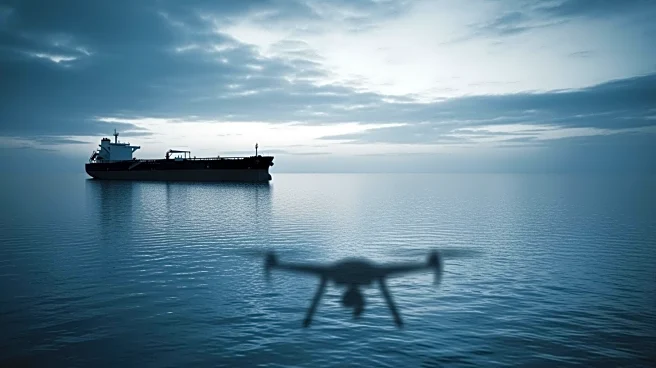
A Russia-bound oil tanker, the Palau-flagged Elbus, was attacked by a drone in the Black Sea, prompting it to request assistance from the Turkish coastguard and alter its course. According to Lloyd’s List
Intelligence and a maritime security source, the attack targeted the vessel's engine room, but no injuries or pollution were reported among the 25 crew members. The incident follows a series of similar attacks in the region, including Ukrainian naval drones hitting Russia-bound tankers in November, which led to increased shipping insurance rates and heightened tensions. The Elbus was en route to the Russian port of Novorossiysk from Singapore when it was attacked. It has since anchored off the northern Turkish port of Inebolu. The Security Service of Ukraine and the Russian embassy in Ankara have not commented on the incident.
Why It's Important?
The attack on the Elbus highlights ongoing security challenges in the Black Sea, a critical region for global shipping of grain, oil, and oil products. Such incidents can disrupt international trade routes and escalate geopolitical tensions, particularly between Russia and Ukraine. The Black Sea's strategic importance is underscored by its shared borders with several countries, including Turkey, Russia, and Ukraine. The recent rise in shipping insurance rates due to these attacks reflects the increased risk and potential economic impact on global supply chains. Stakeholders in the shipping and insurance industries, as well as governments, are closely monitoring the situation to mitigate risks and ensure the safety of maritime operations.
What's Next?
The incident may prompt further investigations by maritime security agencies to identify the perpetrators and prevent future attacks. Shipping companies might enhance security measures for vessels operating in the Black Sea. Additionally, diplomatic efforts could intensify to address the security concerns and stabilize the region. The international community, including organizations like the International Maritime Organization, may engage in discussions to develop strategies for safeguarding maritime routes. The situation could also influence future policy decisions regarding maritime security and international trade regulations.