

What's Happening?
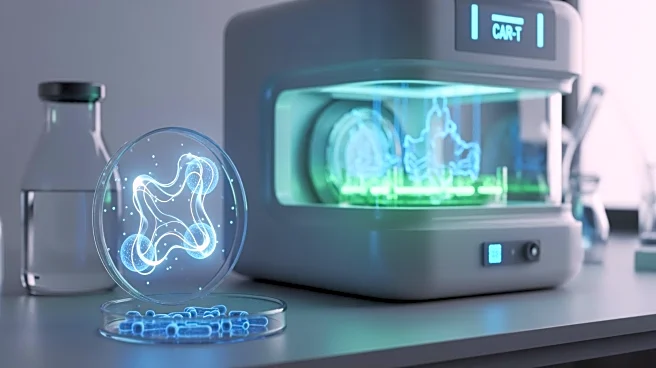
Researchers at the School of Veterinary Medicine have developed a novel approach using lipid nanoparticles (LNPs) to improve CAR T cell therapy for pancreatic cancer. This method targets cancer-associated fibroblasts (CAFs) within the tumor microenvironment,
which traditionally limits the effectiveness of CAR T therapy in solid tumors. By using LNPs to deliver CAR instructions directly to T cells in vivo, the researchers achieved significant tumor growth inhibition in preclinical models. This approach simplifies the CAR T cell therapy process, potentially making it more accessible and cost-effective for treating solid tumors.
Why It's Important?
Pancreatic cancer is notoriously difficult to treat, with low survival rates and limited treatment options. The use of LNPs to enhance CAR T therapy represents a promising advancement in cancer treatment, particularly for solid tumors. This method could lead to more effective therapies by overcoming the barriers posed by the tumor microenvironment. Additionally, the success of this approach in preclinical models suggests potential applications in other cancers and conditions, such as fibrosis and autoimmunity. The development of more accessible and cost-effective cancer therapies could significantly impact patient outcomes and healthcare costs.
What's Next?
The research team plans to explore the use of this LNP-based approach in combination with other therapies, such as chemotherapy and immunotherapy, to further enhance its efficacy. Future studies will focus on optimizing the delivery system and expanding its application to other types of cancer and diseases. The potential for this technology to be used in metastatic cancer treatment is also being investigated, which could provide new hope for patients with advanced-stage cancers. Continued research and clinical trials will be essential to bring this promising therapy to patients.