






What's Happening?
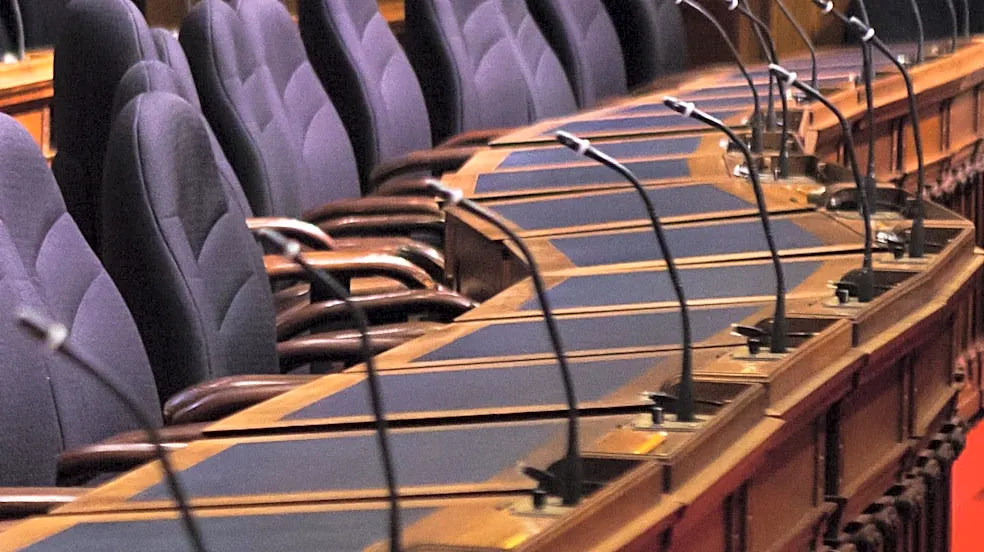
The Somerville City Council's Sustainability and Infrastructure Committee, led by city councilor Jesse Clingan, will convene on Monday at 6 p.m. to request a report on the enforcement of a law designed to reduce the duration of property vacancies. Additionally,
utility companies such as Eversource, National Grid, Comcast, Xfinity, Astound, and Verizon are expected to appear before the committee to discuss the issue of 'double poles'—old utility poles left standing after new ones have been installed. Separately, the City Council Legislative Matters Committee, chaired by city councilor J.T. Scott, will meet on Tuesday at 6 p.m. to consider matters including the protection of significant private trees during construction, updates to the short-term rental ordinance for Airbnbs and Vrbos, and the adoption of an artificial intelligence ordinance. Both meetings will be watchable via Zoom videoconferencing.
Why It's Important?
These committee meetings address several critical issues impacting Somerville residents and businesses. The focus on vacant storefronts reflects concerns about urban blight, economic vitality, and the efficient use of commercial spaces, which can affect local commerce and property values. The 'double pole' issue, while seemingly minor, can pose safety hazards and aesthetic concerns, impacting public infrastructure and community appearance. The proposed regulations on AI and short-term rentals like Airbnb are particularly significant. An AI ordinance could set a precedent for how local governments manage emerging technologies, potentially influencing data privacy, algorithmic bias, and the future of work. Updates to short-term rental rules could impact the local housing market, tourism, and the livelihoods of property owners and traditional hospitality businesses, aiming to balance economic opportunity with community concerns about housing affordability and neighborhood character.
What's Next?
Following these committee meetings, reports and recommendations will likely be presented to the full City Council for further discussion and potential action. For vacant storefronts, the committee's request for an enforcement report could lead to stricter penalties or new incentives to encourage property occupancy. The utility companies' appearance regarding double poles may result in commitments for accelerated removal or new policies to prevent future occurrences. The discussions on AI and short-term rentals are expected to lead to draft ordinances. The AI ordinance could involve public hearings and expert consultations before adoption, while changes to the short-term rental ordinance will likely undergo a similar process, potentially leading to new licensing requirements, occupancy limits, or taxation structures. These legislative efforts will shape Somerville's urban development, technological integration, and housing landscape.
Beyond the Headlines
The discussions in Somerville highlight the complex challenges faced by modern urban centers. The issue of vacant storefronts points to broader economic shifts, including the rise of e-commerce and changing consumer habits, which require innovative urban planning responses. The regulation of AI at a municipal level, while ambitious, reflects a growing recognition of the need for local governance to address the societal impacts of rapidly advancing technology, potentially influencing ethical guidelines and responsible deployment. Similarly, the debate over short-term rentals touches on the tension between property rights, economic opportunity, and the preservation of community character and housing affordability. These local initiatives could serve as models or cautionary tales for other U.S. cities grappling with similar issues, demonstrating how local policy can adapt to global economic and technological trends.