
What's Happening?
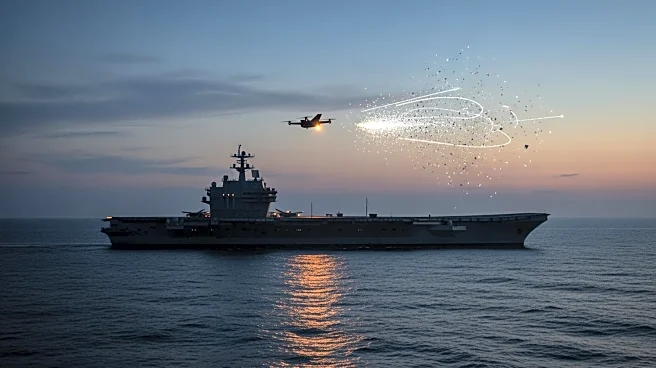
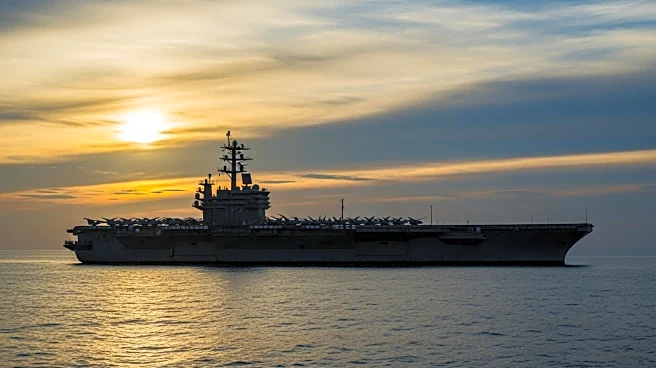
The USS Abraham Lincoln, an aircraft carrier, along with three accompanying warships, has arrived in the Middle East. This deployment comes amid heightened tensions with Iran, particularly concerning its
crackdown on protesters. The U.S. Central Command announced that the strike group is in the Indian Ocean, aiming to promote regional security and stability. This move follows President Trump's previous threats of military action against Iran if it proceeded with mass executions of protesters. The deployment includes thousands of additional service members and advanced military hardware, such as F-35 Lightning II and F/A-18 Super Hornet fighter jets, as well as destroyers equipped with Tomahawk land attack cruise missiles.
Why It's Important?
The arrival of the USS Abraham Lincoln in the Middle East signifies a strategic military positioning by the United States, potentially escalating tensions with Iran. This deployment underscores the U.S.'s readiness to respond to any aggressive actions by Iran, particularly in light of recent protests and the Iranian government's response. The presence of such a significant military force in the region could deter further crackdowns by Iran or provoke a response, impacting regional stability. The situation also highlights the ongoing geopolitical struggle in the Middle East, with potential implications for global oil markets and international relations.
What's Next?
The deployment of the USS Abraham Lincoln could lead to various outcomes, depending on Iran's actions and the U.S.'s strategic decisions. If Iran continues its crackdown on protesters, the U.S. might consider military action, as previously hinted by President Trump. Alternatively, diplomatic efforts could be intensified to de-escalate tensions. The international community, including allies and adversaries, will likely monitor the situation closely, potentially influencing their foreign policy decisions. The U.S. military's presence in the region may also prompt Iran to reconsider its domestic policies and international stance.