




What's Happening?
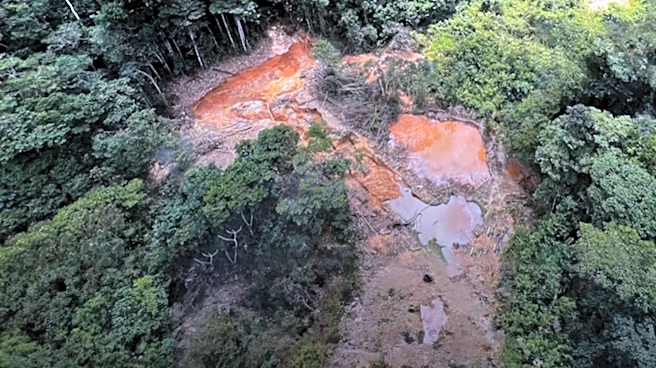
The Amazon rainforest is at a critical juncture due to the combined pressures of expansive agriculture, predatory mining, and a worsening climate. A significant portion of the destruction, particularly illegal mining, is occurring in areas designated
as indigenous territories and nature reserves. This not only devastates the natural environment but also displaces indigenous communities who have historically protected the forest. The ecological importance of the Amazon, which spans nine countries, makes environmental crime an international concern. The loss of primary forest disrupts natural cycles, releasing vast amounts of carbon and transforming the forest from a climate ally into a source of greenhouse gas emissions. While some regions, like the Brazilian Amazon, have shown recent improvements in reducing annual losses due to renewed enforcement, other areas, such as Peru, have seen increases in deforestation.
Why It's Important?
The degradation of the Amazon rainforest has far-reaching implications beyond its immediate borders. It significantly impacts global carbon storage, regional rainfall patterns, and water security across South America. The disruption of the Amazon's natural cycles, including the 'flying rivers' phenomenon that carries rain to the southern continent, can lead to increased droughts and wildfires, further exacerbating climate change. The release of carbon from deforestation and fires contributes to global warming, affecting weather patterns and potentially leading to more extreme climate events in the U.S. and worldwide. The displacement of indigenous communities also represents a loss of invaluable traditional knowledge and cultural heritage essential for sustainable forest management. The economic drivers behind this destruction, such as cattle ranching and soy cultivation, often prioritize short-term profit over long-term ecological stability.
What's Next?
Addressing the crisis in the Amazon requires a multi-faceted approach. Governments must strengthen environmental monitoring and enforcement, particularly in protected areas and indigenous territories. Investigating illicit financial networks that fund illegal resource extraction and improving cross-border cooperation among Amazonian nations are crucial steps. Furthermore, there is a need to address the underlying economic conditions that enable illegal activities, potentially through promoting sustainable economic development alternatives. Satellite surveillance and geospatial intelligence can aid in tracking deforestation and fire outbreaks, but these technological capabilities must be supported by credible institutions and sustained political commitment. The international community will likely continue to pressure Amazonian countries to implement stricter environmental policies and protect indigenous rights.
Beyond the Headlines
The ongoing destruction of the Amazon highlights a deeper conflict between immediate economic gain and long-term environmental and social sustainability. The impunity often associated with environmental crimes, fueled by cuts in conservation funds and ignored laws, sends a dangerous message that profit can be prioritized over planetary health. This situation underscores the interconnectedness of environmental, social, and economic systems. The potential for the Amazon to reach a 'tipping point,' where large sections could transform into a drier savanna state, would have irreversible consequences for global climate regulation and biodiversity. This scenario would not only impact the Amazonian region but also contribute to a more unstable global climate, potentially leading to increased climate-related disasters and economic disruptions worldwide.