
What's Happening?
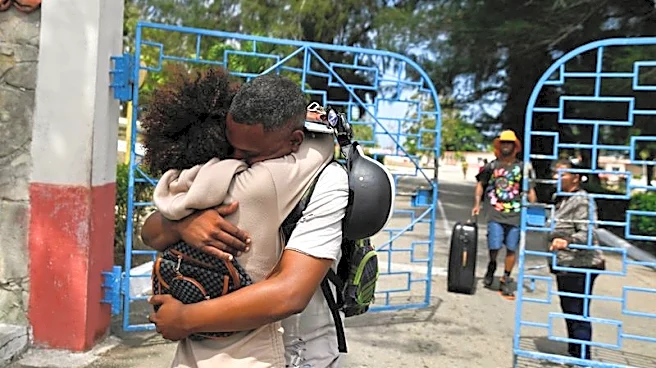
Cuba has announced the release of 2,010 prisoners, marking the second amnesty this year amid ongoing negotiations with the Trump administration. The Cuban government describes the release as a 'humanitarian
and sovereign gesture,' rejecting claims of U.S. influence. The timing coincides with intense pressure from Washington, aiming to overhaul Cuba's economy and governance. The release follows a previous agreement with the Vatican, which saw 51 prisoners freed. Human rights groups, some funded by the U.S., claim Cuba holds hundreds of political prisoners, although Cuba denies this, attributing arrests to crimes like public disorder. The announcement comes as Cuba invites U.S. assistance in economic reforms.
Why It's Important?
This development is crucial as it highlights the strained relations between Cuba and the U.S., with the Trump administration pushing for significant changes in Cuba's political and economic systems. The release of prisoners could be seen as a diplomatic gesture to ease tensions and foster dialogue. Human rights organizations are closely monitoring the situation, advocating for the release of political prisoners. The involvement of the Vatican and the invitation for U.S. economic assistance suggest potential shifts in Cuba's international alliances and domestic policies. The situation underscores the broader geopolitical implications of U.S.-Cuba relations, affecting regional stability and international diplomacy.
What's Next?
The future may involve further diplomatic engagements between Cuba and the U.S., with potential economic collaborations if Cuba accepts U.S. assistance. The Trump administration's pressure campaign could lead to more significant political changes in Cuba, impacting its governance and international relations. Human rights groups will likely continue to advocate for transparency and the release of political prisoners, influencing public opinion and policy decisions. The geopolitical dynamics, including Cuba's interactions with other nations like Russia, could evolve, affecting regional and global diplomatic strategies.