
What's Happening?
The adoption of robotics in African agriculture is gaining momentum, driven by the need for increased efficiency and food security. The African Union High-Level Panel on Emerging Technologies (APET) has
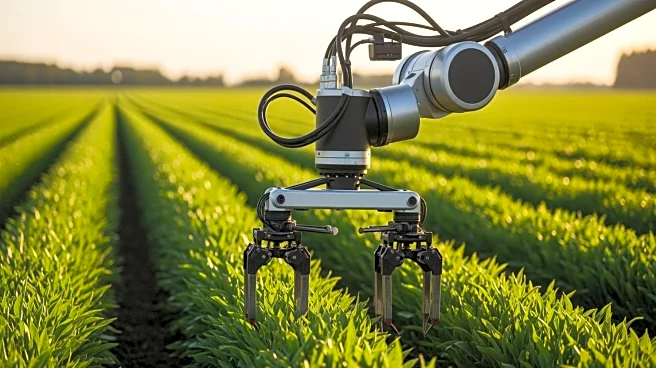
highlighted the potential of robotics-based mechanization to transform agricultural practices across the continent. This includes the integration of robots in weeding and harvesting processes, which traditionally rely on manual labor. The use of robotic systems allows for systematic actions such as selective mechanical weeding and crop health monitoring, which can significantly reduce labor dependency and improve operational efficiency. The global market for agricultural robots is projected to grow substantially, with estimates suggesting it could reach USD 56.26 billion by 2030. This growth is fueled by advancements in artificial intelligence (AI) and machine learning, which enable robots to perform complex tasks with precision and minimal human intervention.
Why It's Important?
The integration of robotics in agriculture is crucial for addressing food security challenges in Africa. By reducing reliance on manual labor and enhancing precision in farming operations, robotic systems can help mitigate issues such as food wastage and poor harvesting practices. This technological shift is expected to bolster agricultural efficiency and contribute to a sustainable food supply for Africa's growing population. Additionally, the use of AI-driven agricultural robots supports data-driven decision-making, optimizing resource utilization and improving crop yields. As technology costs decline, these innovations become more accessible, offering a strategic advantage for sustainable and resilient agricultural practices.
What's Next?
As the adoption of agricultural robotics continues to expand, African countries are likely to see significant improvements in food production and security. The focus will be on scaling up the use of AI and robotics in farming operations, with potential support from government policies and international partnerships. The continued development of AI and machine learning technologies will further enhance the capabilities of agricultural robots, making them more efficient and cost-effective. This could lead to increased investment in the sector and the establishment of new business models centered around precision agriculture and sustainable farming practices.
Beyond the Headlines
The shift towards robotics in agriculture also raises important ethical and social considerations. The reduction in manual labor could impact employment in rural areas, necessitating the development of new skills and job opportunities for displaced workers. Additionally, the reliance on technology in farming may require significant infrastructure investments and policy support to ensure equitable access and benefits across different regions. The long-term success of this transition will depend on balancing technological advancements with social and economic needs.