



What's Happening?
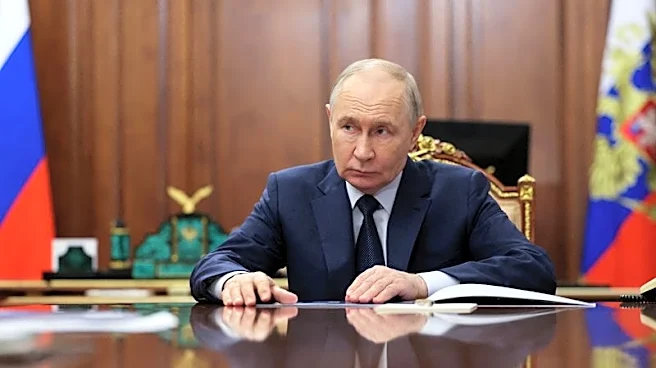
Russian beauty influencer Victoria Bonya has publicly criticized President Vladimir Putin's internet restrictions, claiming they prevent communication with loved ones. Her Instagram post, which has garnered significant attention, marks a rare instance
of public dissent from typically apolitical influencers. Bonya's criticism is part of a broader discontent among Russian influencers and bloggers, who are increasingly vocal about the government's policies. The Kremlin has acknowledged the criticism, with spokesman Dmitry Peskov stating that the issues raised are being addressed. This development comes amid declining support for Putin and increased economic hardships in Russia.
Why It's Important?
The public criticism from influencers like Victoria Bonya highlights a shift in the typically apolitical stance of social media figures in Russia. This growing discontent could signal a broader change in public opinion, potentially impacting Putin's approval ratings and the government's control over information. The internet restrictions have affected not only personal communication but also the livelihoods of influencers who rely on social media platforms for income. This situation underscores the tension between government control and public freedom, with potential implications for Russia's political stability and economic conditions.
What's Next?
The Kremlin's acknowledgment of the criticism suggests that the government may consider revising its internet policies. However, with Putin's approval ratings slipping, there could be further restrictions or repressive measures to maintain control. The response from the public and influencers will be crucial in determining the government's next steps. If the discontent continues to grow, it could lead to more significant political and social changes in Russia.
Beyond the Headlines
The criticism from influencers like Bonya reflects a deeper cultural shift in Russia, where public figures are increasingly willing to speak out against government policies. This could lead to a more open dialogue about political and social issues, challenging the traditional narrative controlled by the Kremlin. The situation also raises ethical questions about freedom of expression and the role of influencers in shaping public opinion.