




What's Happening?
The Saudi Ministry of Interior is actively pursuing the localization of its military industries, a key component of Saudi Vision 2030. This initiative aims to localize over 50% of military spending by 2030, thereby enhancing the nation's military readiness
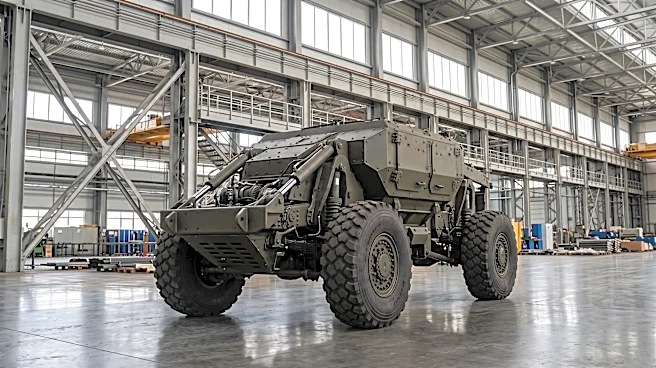
and strategic autonomy. To facilitate this, the Ministry established an executive office for military industry localization, focusing on strategic planning, legislative and regulatory frameworks, and technical development. These efforts have led to contracts with national companies for the manufacturing, supply, and sustainment of various military and security systems. These systems include armored vehicles, maritime and aerial platforms, command and control systems, security surveillance systems, weapons and ammunition, uniforms, security equipment, and unmanned aircraft systems. The Ministry's commitment to this goal was recognized in 2025 with two Military Industry Localization Excellence Awards from the General Authority for Military Industries (GAMI) for planning and implementation, making it the first military and security entity to receive both. In 2026, it also received an award for supporting and qualifying a local security technology product.
Why It's Important?
This localization drive is crucial for Saudi Arabia's economic diversification and national security. By localizing military spending, the Kingdom aims to reduce its reliance on foreign suppliers, keeping a significant portion of defense expenditure within its economy. This directly contributes to the nation's Gross Domestic Product (GDP) and fosters the growth of a domestic military-industrial complex. The development of local manufacturing capabilities for advanced military and security systems, including AI-driven technologies, security vehicles, fixed-wing aircraft, and robotics, signifies a strategic shift towards self-sufficiency. This move not only strengthens Saudi Arabia's defense capabilities but also positions it as a leader in security indicators regionally and globally. Furthermore, it creates job opportunities, transfers technology, and builds a skilled workforce, aligning with broader national development programs like the National Transformation Program (NTP) and the National Industrial Development and Logistics Program (NIDLP).
What's Next?
The Ministry of Interior will continue to implement its detailed plan for localizing security and military equipment procurement. This includes further developing its strategy, refining legislative and regulatory frameworks, and advancing technical capabilities. The ongoing focus will be on expanding contracts with national companies to manufacture and sustain a wider range of military and security systems. The Ministry is also expected to continue its emphasis on integrating cutting-edge technologies such as artificial intelligence and robotics into its defense and security infrastructure. These efforts are anticipated to further strengthen Saudi Arabia's position in security indicators and contribute to its economic growth as it progresses towards the 2030 localization target. The success of these initiatives will likely be measured by the percentage of military spending localized and the continued enhancement of national security capabilities.
Beyond the Headlines
Beyond the immediate economic and security benefits, Saudi Arabia's military industry localization initiative carries deeper implications for regional stability and technological advancement. By developing a robust domestic defense industry, Saudi Arabia could potentially alter the dynamics of arms procurement in the Middle East, reducing its vulnerability to geopolitical shifts and supply chain disruptions. This self-reliance could also lead to increased influence in regional security matters. Ethically, the development of advanced military technologies domestically raises questions about their future application and export, and the standards of oversight that will be put in place. Culturally, fostering a high-tech military industry could inspire a new generation of Saudi engineers and scientists, driving innovation and contributing to a knowledge-based economy. The long-term success of this initiative will depend on sustained investment in research and development, talent cultivation, and the ability to adapt to evolving global technological landscapes.