
What's Happening?
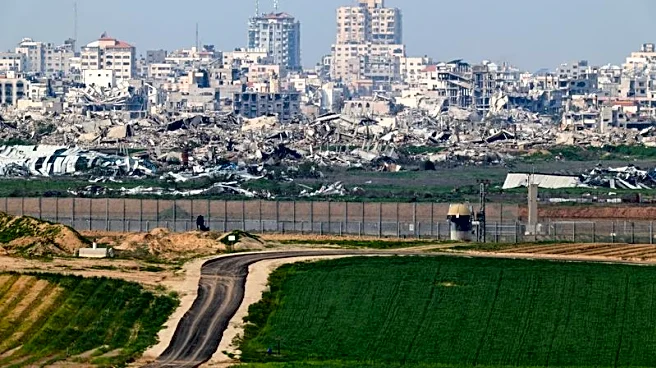
President Trump has initiated the formation of a 'Board of Peace' for Gaza, aiming to stabilize the region following a fragile ceasefire. The board is set to include notable figures such as Argentina's
Javier Milei and Canada's Mark Carney as founding members. Turkey's President Recep Tayyip Erdogan has also been invited to join, while Egypt's President Abdel-Fattah El-Sisi is considering participation. This initiative comes as Israel expresses concerns over certain aspects of the plan, highlighting the complexities involved in achieving lasting peace in the region. The board's formation is part of a broader effort by President Trump to address ongoing tensions and foster dialogue among key international stakeholders.
Why It's Important?
The establishment of the 'Board of Peace' is significant as it represents a concerted effort by the U.S. to mediate and stabilize one of the most volatile regions in the world. The inclusion of international leaders like Milei, Carney, and potentially Erdogan and El-Sisi, underscores the global dimension of the peace process. However, Israel's concerns suggest potential challenges in aligning the interests of all parties involved. The success or failure of this initiative could have far-reaching implications for U.S. foreign policy and its role in Middle Eastern geopolitics. It also highlights the delicate balance required in international diplomacy, where diverse political agendas must be reconciled to achieve peace.
What's Next?
The next steps involve formalizing the membership of the 'Board of Peace' and addressing the concerns raised by Israel. Diplomatic efforts will likely intensify as the U.S. seeks to ensure that the board's objectives align with the interests of all stakeholders. The reactions of other regional powers and international organizations will be crucial in determining the board's effectiveness. Continued dialogue and negotiation will be essential to overcoming obstacles and advancing the peace process. The involvement of high-profile international figures may also influence public perception and support for the initiative.