



What's Happening?
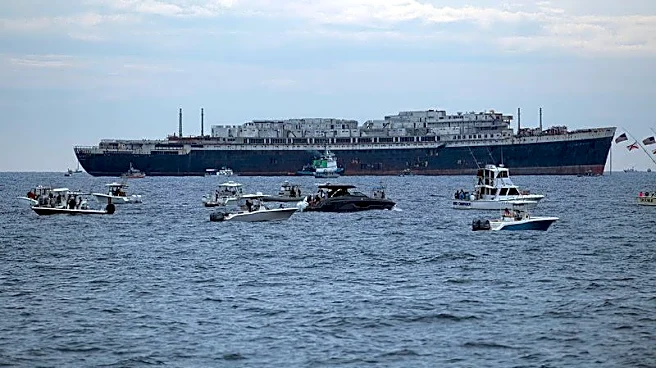
The legendary SS United States, a historic ocean liner, has been intentionally sunk to become the world's largest artificial reef in the Gulf of America. This event, which occurred on November 11, 2026, along Florida's Gulf Coast, marks a new chapter
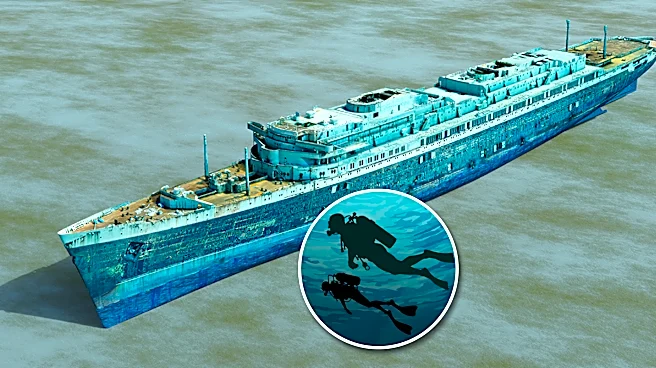
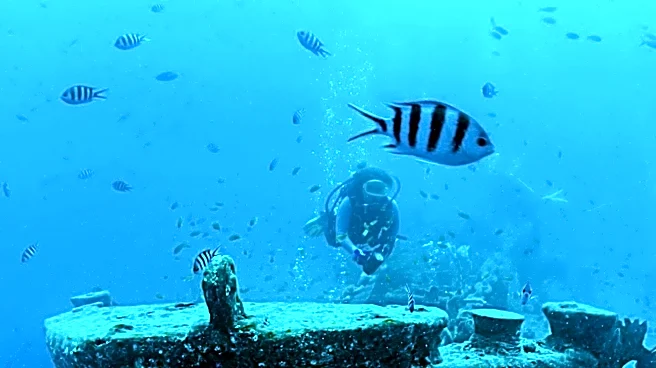
for the vessel. The SS United States, approximately 990 feet long, was deployed about 22 nautical miles southwest of Destin-Fort Walton Beach, resting in approximately 180 feet of water. Its upper decks are expected to be accessible at depths of around 55–60 feet. This transformation aims to create new marine habitats, offer exploration opportunities for divers, and serve as a natural laboratory for scientists.
Why It's Important?
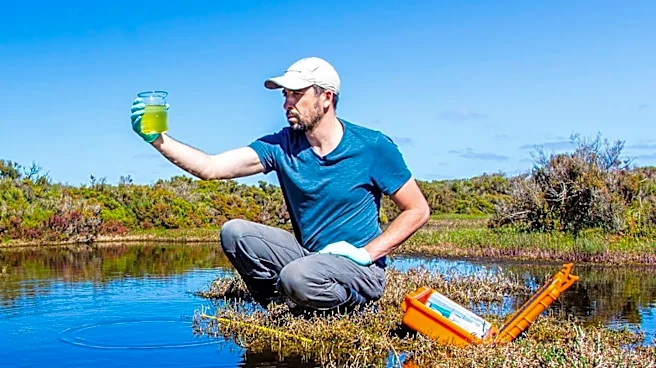
The creation of the SS United States artificial reef holds significant importance for marine conservation, tourism, and local economies. As the world's largest artificial reef, it will provide a vast and complex habitat for marine organisms, attracting various species such as snapper, grouper, and amberjack, along with crustaceans, sponges, and algae. This ecological enhancement supports biodiversity and can aid in the recovery of fish populations. Economically, the reef is expected to become an internationally recognized diving destination, drawing tourists and supporting local businesses like hotels, restaurants, dive shops, and charter operators in coastal communities. For scientists, it offers a unique opportunity to study marine colonization and ecosystem development on an unprecedented scale, with researchers from institutions like Woods Hole Oceanographic Institution already planning studies.
What's Next?
The immediate next steps involve monitoring the colonization and ecological development of the SS United States reef. Researchers will study how marine organisms settle on the vessel and how the biological community evolves over time. Dive operators and enthusiasts will begin exploring the accessible sections of the reef, with guidelines and safety assessments being crucial for responsible access. The project aims to promote marine conservation, environmental education, and responsible ocean recreation. Continued collaboration between marine scientists, conservationists, and local communities will be essential to maximize the ecological and economic benefits of this new artificial reef, ensuring its long-term sustainability and impact.
Beyond the Headlines
The transformation of the SS United States into an artificial reef symbolizes a creative approach to preserving maritime history while simultaneously addressing environmental and economic needs. It highlights the potential for repurposing large, decommissioned structures to serve ecological purposes, offering a tangible example of how human artifacts can contribute to marine life. This project also underscores the growing recognition of artificial reefs as valuable tools for habitat restoration and sustainable tourism, provided they are appropriately sited, prepared, and monitored. The initiative could inspire similar projects globally, demonstrating a pathway for integrating historical preservation with environmental stewardship and economic development in coastal regions.