





What's Happening?
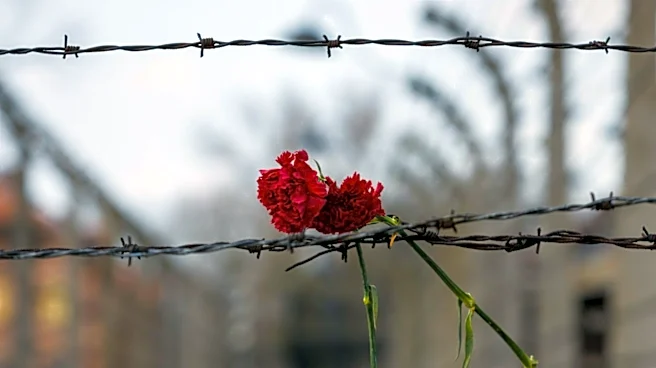
Montana Senator Steve Daines recently visited Auschwitz, accompanied by Rabbi Chaim Bruk, the State's Chabad Shaliach. The visit to the former Nazi concentration camp in Poland underscores a moment of remembrance and reflection on the atrocities committed
during the Holocaust. This event highlights the ongoing efforts by political figures and religious leaders to acknowledge historical events and promote understanding. The presence of a U.S. Senator alongside a prominent religious leader from his state at such a historically significant site emphasizes the cross-cultural and interfaith importance of remembering the past. The visit serves as a powerful reminder of the need to combat hatred and intolerance.
Why It's Important?
This visit is important as it demonstrates a commitment from U.S. political leadership to engage with historical events of global significance, particularly those related to human rights and religious persecution. Senator Daines' presence at Auschwitz, a symbol of immense suffering and genocide, sends a clear message about the importance of Holocaust remembrance and education. For the Jewish community, and particularly for Rabbi Chaim Bruk, this joint visit reinforces the idea that their history and experiences are recognized and valued at the highest levels of government. It also serves to educate the public about the dangers of extremism and the importance of vigilance against antisemitism and other forms of hatred, fostering a sense of shared responsibility in preventing future atrocities.
What's Next?
While the immediate next steps following this specific visit are not detailed, such engagements often contribute to broader discussions on human rights, religious freedom, and historical education. It is possible that Senator Daines may use this experience to inform future legislative efforts or public statements related to these topics. The visit could also inspire further interfaith dialogues and educational initiatives within Montana and beyond, encouraging communities to learn from history. Continued collaboration between political leaders and religious figures on issues of historical memory and social justice is likely to be a recurring theme, aiming to ensure that the lessons of the past are not forgotten.
Beyond the Headlines
Beyond the immediate act of remembrance, this visit carries deeper implications for the role of political leaders in moral advocacy. By visiting Auschwitz, Senator Daines is not merely observing a historical site but is actively participating in a global act of bearing witness. This act can help to solidify the understanding that historical atrocities are not isolated events but have profound and lasting impacts that require continuous attention and education. It also subtly reinforces the idea that combating hatred and promoting tolerance is a non-partisan issue, transcending political divides. The joint presence of a senator and a rabbi also highlights the enduring power of interfaith solidarity in addressing shared human challenges and promoting a more just and compassionate society.