
What's Happening?
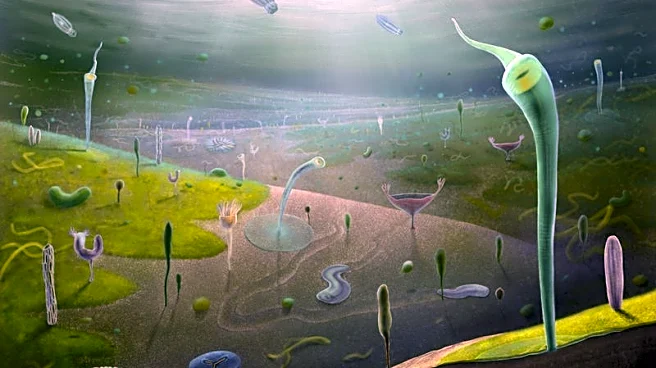
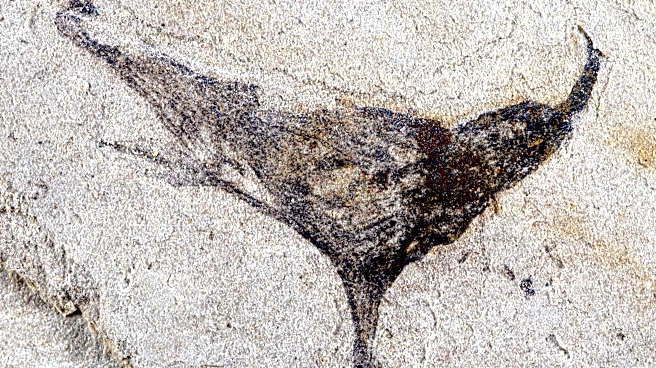
A newly discovered fossil site in southwestern China has revealed a diverse array of complex life forms that existed before the Cambrian explosion. This site, known as the Jiangchuan Biota, contains over 700 specimens of fossilized animals and algae dating
back to the late Ediacaran period, between 554 million and 539 million years ago. The fossils include bilateral worm-like animals, early comb jellies, and relatives of starfish and sea cucumbers. These findings suggest that complex life forms were present millions of years before the Cambrian explosion, challenging previous assumptions about the timeline of animal evolution.
Why It's Important?
The discovery of these fossils provides new insights into the evolution of complex life on Earth. It suggests that the diversification of animal life began earlier than previously thought, during the Ediacaran period. This challenges the traditional view that the Cambrian explosion was the sole period of rapid evolutionary development. Understanding the origins and evolution of complex life is crucial for comprehending the history of life on Earth and the processes that have shaped biodiversity. This discovery could lead to a reevaluation of evolutionary timelines and the factors that drove the emergence of complex organisms.
Beyond the Headlines
The preservation of these fossils as carbonaceous films, which capture details of soft tissues, offers a unique glimpse into the anatomy of early complex organisms. This method of preservation is rare, suggesting that similar communities may have existed elsewhere but were not preserved. The findings highlight the importance of fossil sites in understanding evolutionary history and underscore the need for continued exploration and study of ancient life forms. The discovery also raises questions about the environmental conditions that allowed for the development of complex life during the Ediacaran period.