






What's Happening?
Sustainable agriculture is being highlighted as a key strategy to reduce food waste by addressing losses at the farm level, before produce reaches consumers. This approach involves careful crop planning based on real demand, efficient harvesting techniques
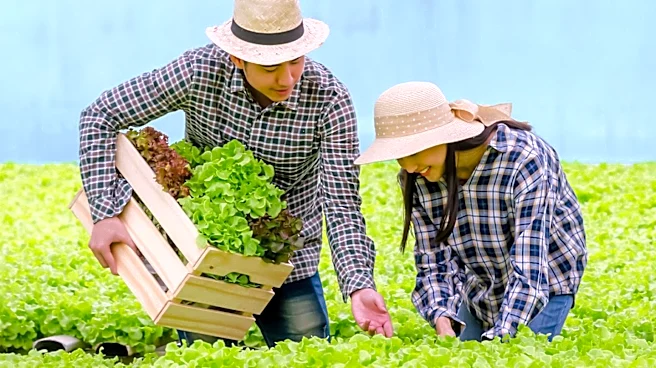
to minimize damage, and improved storage practices to preserve quality. Farmers are encouraged to review sales data and buyer requirements to avoid overproduction. During harvest, gentle handling and appropriate containers are crucial to prevent bruising and cuts. Post-harvest, proper temperature, humidity, and ventilation in storage, along with stock rotation, help maintain produce quality. Additionally, sustainable agriculture emphasizes building healthier soil through practices like crop rotation and composting, and finding useful paths for unavoidable organic waste, such as animal feed or composting, rather than sending it to landfills.
Why It's Important?
Reducing food waste through sustainable agriculture has significant economic, environmental, and social implications. Economically, it helps farmers minimize losses, reduce disposal costs, and make better use of resources like land, water, energy, and labor, ultimately improving profitability. Environmentally, preventing food waste means fewer resources are expended on crops that are never consumed, reducing the carbon footprint associated with food production and transportation. It also lessens the burden on landfills, where decomposing food produces methane, a potent greenhouse gas. Socially, by keeping more food within the supply chain, sustainable agriculture can contribute to food security and reduce hunger, making the food system more resilient and equitable.
What's Next?
The adoption of sustainable agricultural practices to combat food waste is expected to grow, driven by increasing awareness among farmers, consumers, and policymakers. Farmers will likely continue to implement more precise crop planning tools, invest in better harvesting and storage technologies, and explore partnerships for diverting surplus or imperfect produce. There may be increased demand for agricultural extension services and educational programs focused on waste reduction techniques. Furthermore, businesses in the food supply chain, from processors to retailers, are likely to collaborate more closely with farmers to optimize demand forecasting and logistics, further minimizing waste. Policy incentives and regulations promoting sustainable farming and food waste reduction could also become more prevalent.
Beyond the Headlines
The integration of sustainable agriculture and food waste reduction represents a fundamental shift in how food systems are viewed, moving towards a holistic approach that values every stage of production. This perspective challenges the conventional focus solely on yield maximization, instead prioritizing resource efficiency and waste prevention. It also highlights the interconnectedness of soil health, biodiversity, and food security, emphasizing that sustainable practices are not just about environmental protection but also about long-term economic viability and social well-being. This shift could lead to a re-evaluation of food quality standards, potentially creating markets for 'ugly' produce and fostering greater appreciation for the resources invested in food production, ultimately influencing consumer behavior and dietary choices towards more sustainable patterns.