



What's Happening?
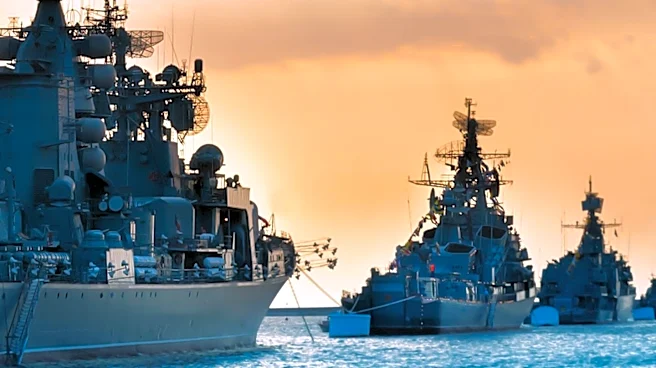
Saudi Arabia is forming a multinational naval coalition to safeguard Red Sea commerce from Houthi attacks. According to retired US admiral James Stavridis, 14 countries and organizations have joined the coalition, which aims to protect shipping routes
linking the Indian Ocean with the Suez Canal. The coalition will combine regional fleets, Saudi logistical support, and potential US and European assistance. The Red Sea-Suez route is crucial, handling up to 30% of containerized shipping and 15% of global petroleum products. Participants include Egypt, Turkey, Pakistan, Kuwait, Bahrain, Qatar, and Jordan, with Saudi Arabia providing leadership and logistics.
Why It's Important?
The Red Sea is a vital maritime route for global trade, carrying significant shares of container traffic and petroleum products. The coalition's formation highlights the ongoing threat posed by Houthi attacks, which disrupt these critical shipping lanes. Protecting these routes is essential for maintaining global trade security and economic stability. The involvement of multiple countries underscores the international concern over regional tensions and the need for coordinated efforts to ensure maritime security.
What's Next?
The coalition's next steps include naming all signatories, establishing a command structure, and deploying warships. The coalition will focus on mapping Houthi operating patterns and tracking missile and drone launches, potentially using US satellites and the EU's Operation Aspides. Convoy formations and intelligence support from the US and Operation Aspides are expected. The UAE and Oman have not joined the coalition, with Abu Dhabi's absence linked to strains with Riyadh and Iranian attacks.