




What's Happening?
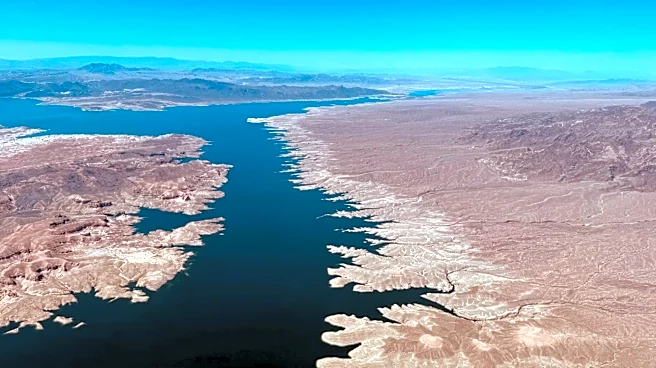
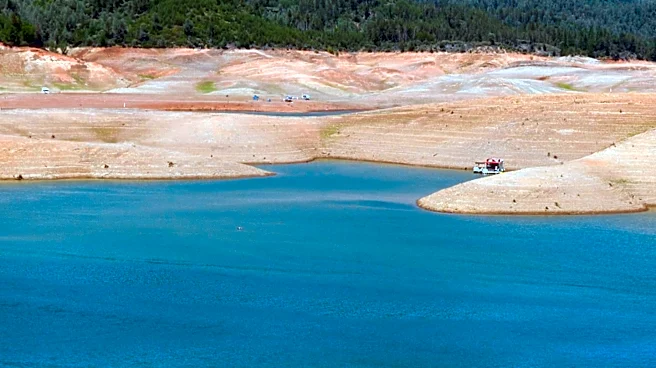
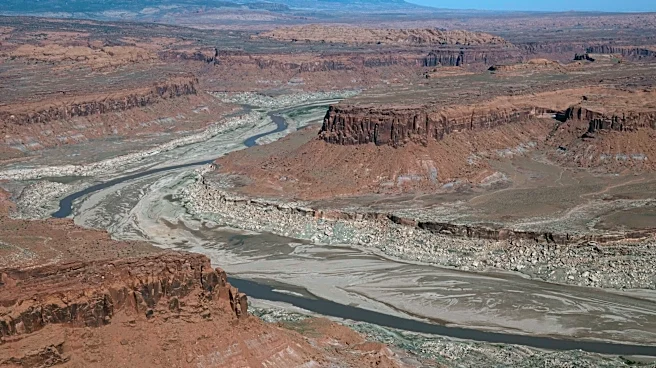
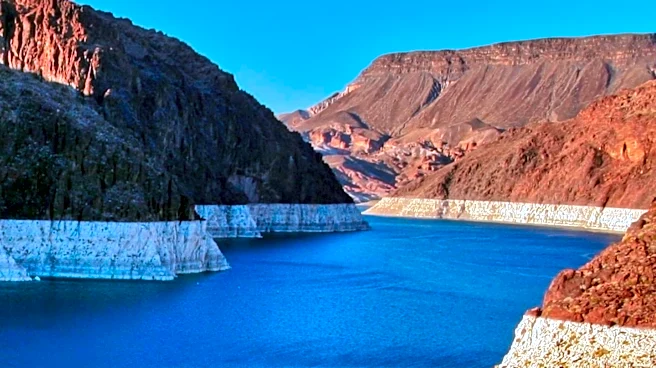
Lake Mead, the largest reservoir in the United States, has reached its lowest water level in history, raising significant concerns about water supply and hydropower generation. The reservoir, which is a crucial water source for seven U.S. states, Native
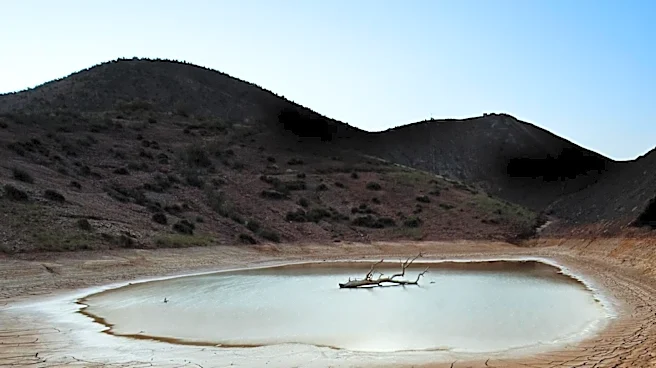
American tribes, and two Mexican states, is nearing a critical operational threshold. If water levels drop to 1,035 feet, some turbines at the Hoover Dam will need to shut down, reducing its power generation capacity by 70%. The Bureau of Reclamation's July 2026 forecast indicates that Lake Mead's water levels could approach this threshold in the coming months, potentially falling below it by spring next year. This situation is part of a broader trend affecting multiple reservoirs in the U.S., with nine out of 54 tracked by the Bureau recently recording their lowest levels in 30 years.
Why It's Important?
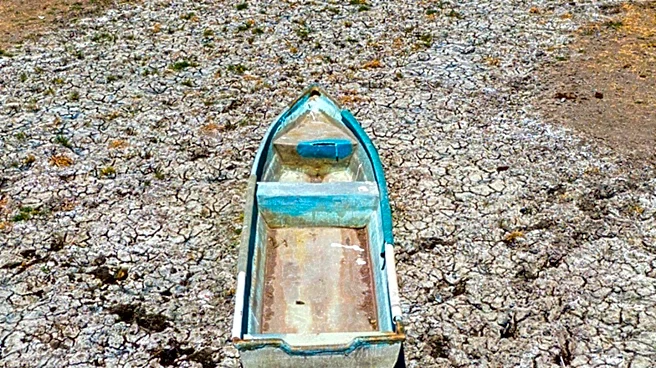
The declining water levels at Lake Mead have far-reaching implications for the southwestern United States. The reservoir is a vital source of water for drinking, agriculture, industry, and hydropower. A reduction in water availability could lead to significant economic and social challenges, particularly for states like Arizona, California, and Nevada, which rely heavily on the Colorado River Basin. The potential shutdown of turbines at the Hoover Dam would not only impact power supply but also increase energy costs and strain the region's power grid. Additionally, the situation could exacerbate tensions among states and stakeholders over water rights and usage, as evidenced by Arizona Governor Katie Hobbs' strong opposition to proposed federal water use reductions.
What's Next?
In response to the crisis, states and stakeholders are likely to engage in negotiations to address water allocation and conservation measures. The federal government has proposed that states reduce their water use by up to 3 million acre-feet per year until 2036, with assessments every two years based on basin conditions. However, this proposal has already faced pushback, indicating potential political and legal battles ahead. Stakeholders will need to balance immediate water needs with long-term sustainability, possibly leading to new agreements or policies to manage the dwindling water resources effectively.