





What's Happening?
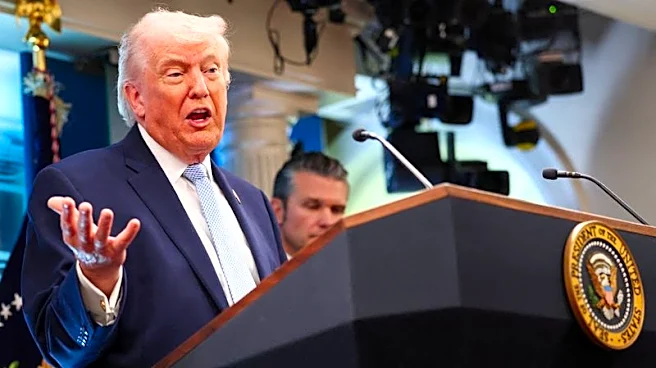
A 10-day ceasefire has been established between Israel and Lebanon, with U.S. President Donald Trump expressing intentions to host Israeli Prime Minister Benjamin Netanyahu and Lebanese President Joseph Aoun at the White House. This development, while
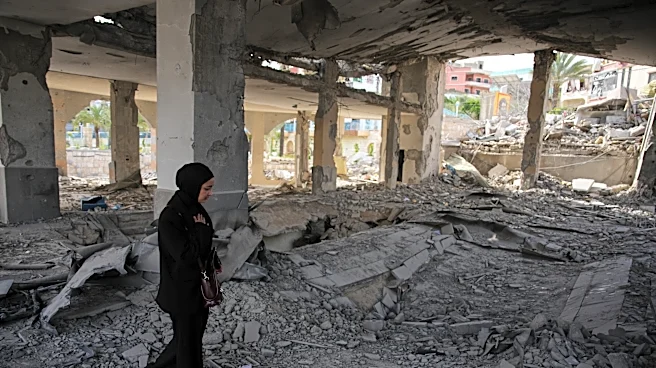
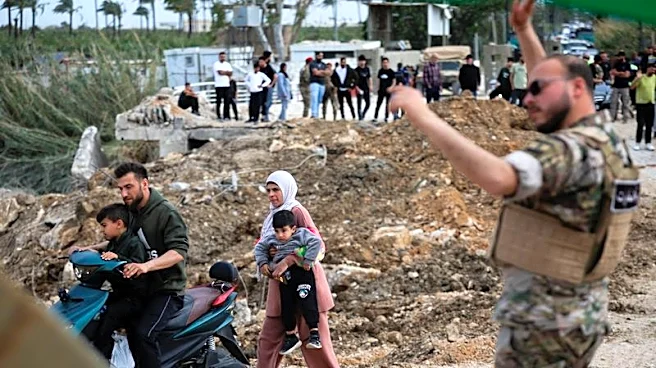
not a peace agreement, marks a significant diplomatic step for Lebanon, which has been embroiled in conflict since early March 2026. The ceasefire offers a potential reduction in risk for Lebanon, a country that has been in economic turmoil for years. The Lebanese economy, heavily reliant on services, tourism, and remittances, has been severely impacted by ongoing conflicts, with infrastructure and public services struggling to function. The ceasefire could provide a window for Lebanon to shift from a survival economy to one focused on investment and growth.
Why It's Important?
The ceasefire and potential diplomatic engagement could have profound implications for Lebanon's economy. A reduction in conflict risk could lower insurance costs, improve financing conditions, and encourage local and international investment. This is crucial for Lebanon, which requires substantial reconstruction funding following years of conflict. For Israel, a stable northern border could reduce economic strain on its communities and industries affected by the conflict. The ceasefire could also pave the way for international aid and investment, crucial for Lebanon's recovery. However, Lebanon still faces significant challenges, including the need for structural reforms and the resolution of internal political issues.
What's Next?
If the ceasefire holds, Lebanon may see increased international support and investment, particularly in infrastructure and energy sectors. The involvement of international energy companies in Lebanon's offshore projects could become more viable, providing a long-term economic opportunity. However, Lebanon must implement reforms to stabilize its economy and restore public confidence. For Israel, a stable Lebanon could lead to reduced security costs and potential areas of cooperation in sectors like water, energy, and tourism. The success of these developments depends on sustained diplomatic efforts and internal reforms in Lebanon.
Beyond the Headlines
The ceasefire highlights the complex interplay between security and economic stability in conflict zones. Lebanon's situation underscores the importance of international diplomatic efforts in facilitating economic recovery. The potential peace process could also influence regional dynamics, affecting relations between Israel and other neighboring countries. The role of international organizations and donors will be critical in supporting Lebanon's transition from conflict to recovery, emphasizing the need for a coordinated global response.