



What's Happening?
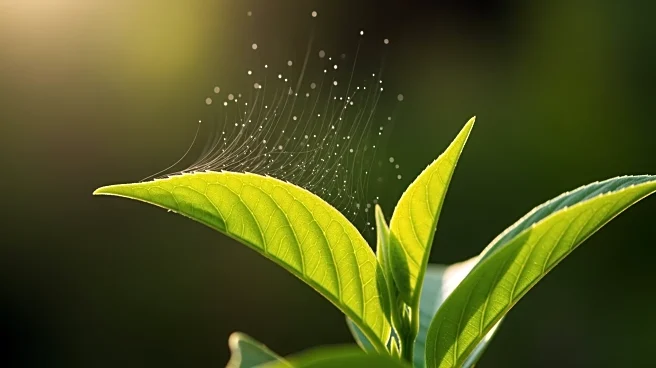
Researchers have detected biophotons, ultraweak particles of light, emanating from living organisms, including mice and plants. These biophotons are produced by cellular structures like mitochondria and have been difficult to isolate due to interference
from other light sources. The study observed biophotons from the entire body of mice and leaves of an umbrella tree, confirming their existence. The findings suggest potential applications in agriculture, such as assessing seed germination without physical contact, and have sparked interest due to their resemblance to psychic 'auras'.
Why It's Important?
The detection of biophotons offers new insights into cellular processes and their potential applications in agriculture and other fields. By understanding how biophotons correlate with biological functions, researchers can develop non-invasive methods to assess plant health and growth, improving agricultural efficiency. Additionally, the study contributes to the broader understanding of light-based cellular communication, which could have implications for biotechnology and medical research. The interest in biophotons also highlights the intersection of science and cultural perceptions, as their resemblance to 'auras' has captured public imagination.
What's Next?
Future research may focus on exploring the mechanisms behind biophoton production and their correlation with specific biological processes. Studies may also investigate the potential for biophotons to serve as biomarkers for cellular health and disease. Collaboration between researchers and agricultural experts will be essential to translate these findings into practical applications, potentially leading to new methods for crop monitoring and management.
Beyond the Headlines
The cultural impact of biophoton research may influence public perception of scientific discoveries, highlighting the importance of transparent communication and education about the benefits and limitations of such findings. As research progresses, ethical considerations regarding the use of biophotons in agriculture and other fields should be addressed, ensuring responsible application of this technology.