


What's Happening?
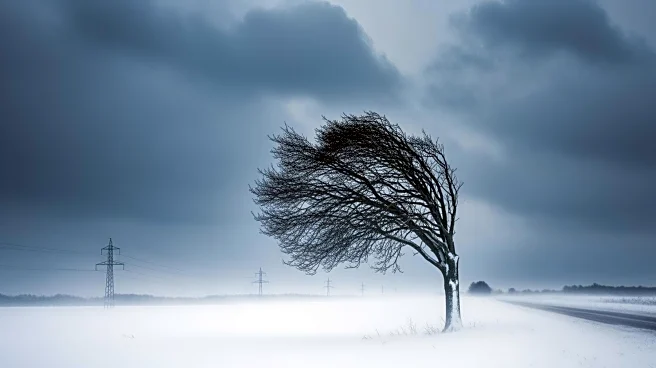
A severe winter storm named Goretti has caused significant disruptions across the United Kingdom and France. The storm brought high winds, rain, and snow, leading to power outages and travel delays. In the UK, over 57,000 homes and businesses were left
without power, particularly in southwestern England, the Midlands, and Wales. The storm also brought heavy snow to northern Scotland, resulting in the closure of more than 250 schools. In France, strong winds left 320,000 homes without power, primarily in the Normandy region. The storm prompted the UK’s Met Office to issue a rare red weather warning, indicating life-threatening conditions. Travel services, including regional train services in France and flights at Birmingham Airport in the UK, faced significant disruptions.
Why It's Important?
The impact of Storm Goretti highlights the vulnerability of infrastructure to extreme weather events, which are becoming more frequent due to climate change. The power outages and travel disruptions affect daily life and economic activities, emphasizing the need for resilient infrastructure. The storm's impact on schools and transportation systems underscores the broader societal challenges posed by severe weather. Additionally, the issuance of a red weather warning in the UK reflects the seriousness of the situation and the potential risks to public safety. The storm's effects on both the UK and France demonstrate the interconnected nature of weather systems and the need for coordinated responses across borders.
What's Next?
As the storm subsides, efforts will focus on restoring power and clearing travel routes. Authorities in both the UK and France will likely assess the damage and consider measures to prevent similar disruptions in the future. The response to the storm may prompt discussions on improving infrastructure resilience and emergency preparedness. In the short term, residents in affected areas will need to remain cautious and follow guidance from local authorities. The storm's aftermath may also lead to increased scrutiny of weather forecasting and warning systems to ensure timely and accurate alerts.