





What's Happening?
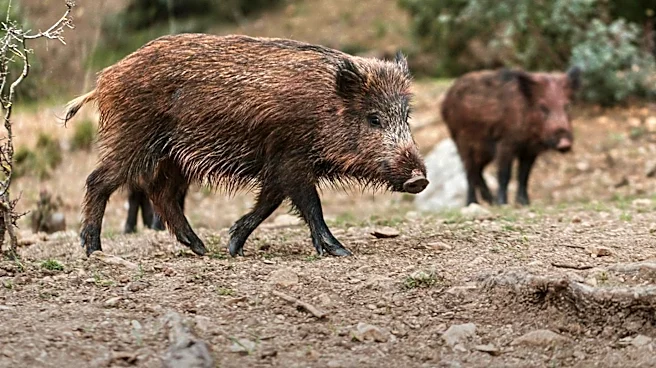
The U.S. Department of Agriculture (USDA) has awarded $51.9 million to 29 partnership projects across 13 states. This funding is specifically aimed at controlling and eradicating feral swine populations, which cause significant damage to agricultural
lands and natural resources. Feral swine are known to harm plant and wildlife habitats, degrade soil and water quality, and carry diseases that can affect livestock and human health, such as brucellosis. The Animal and Plant Health Inspection Service (APHIS) estimates the annual cost of feral swine damage in the U.S. to be at least $3.4 billion. The projects, located in states including Alabama, Arkansas, California, Florida, and Texas, will implement coordinated management strategies, including expanded surveillance, trapping, and removal operations. Funding for these initiatives comes from the Working Families Tax Cuts Act, which supports Natural Resources Conservation Service (NRCS) conservation programs.
Why It's Important?
This significant investment by the USDA underscores the severe economic and ecological threat posed by feral swine. The estimated $3.4 billion in annual damages highlights the substantial financial burden on the agricultural sector and the broader economy. By reducing feral swine populations, the projects aim to protect agricultural productivity, preserve natural resources, and mitigate the spread of diseases. This initiative is crucial for farmers and ranchers who face direct losses from crop destruction and livestock health issues. Furthermore, the protection of soil and water quality has long-term environmental benefits, contributing to ecosystem health and sustainability. The coordinated approach involving NRCS, APHIS, and local partners is vital for effective management, as feral swine populations are widespread and require comprehensive strategies to control their impact.
What's Next?
The 29 projects will proceed with their planned activities, focusing on reducing feral swine populations through various methods. These include expanded surveillance, trapping, and removal operations. Additionally, the initiatives will involve natural resource damage assessments, land restoration efforts, and educational programs for landowners. The NRCS will provide funding through grant agreements with participating partners, ensuring a collaborative effort between the selected partners, NRCS, and APHIS. This is part of a larger $105 million investment in the Feral Swine Eradication and Control Pilot Program. Since 2020, NRCS has already invested $92.9 million in 63 projects, assisting over 6,700 landowners across nearly 9 million acres in their efforts to mitigate feral swine damage. The ongoing implementation of these projects is expected to continue reducing the impact of feral swine on U.S. agriculture and natural resources.
Beyond the Headlines
The USDA's sustained effort to combat feral swine reflects a broader commitment to addressing invasive species, which often have far-reaching consequences beyond immediate economic losses. The presence of feral swine not only impacts agriculture but also disrupts native ecosystems, potentially leading to biodiversity loss and altered ecological processes. The focus on landowner education and training is critical for long-term success, as community involvement and understanding are essential for effective wildlife management. This program also highlights the interconnectedness of environmental health, agricultural stability, and public health, given the disease transmission risks associated with feral swine. The funding mechanism, derived from the Working Families Tax Cuts Act, indicates a legislative recognition of the importance of conservation programs in supporting economic well-being and environmental resilience.