




What's Happening?
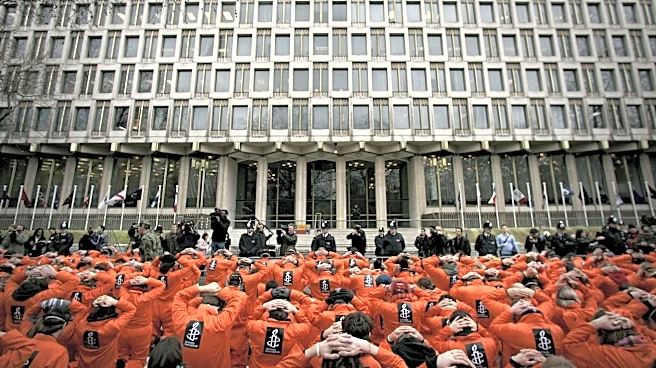
A new briefing from Amnesty International, titled 'Sparking Change – Children’s Right to Protest: A Perspective from Children and Young Activists,' highlights the human rights abuses, violence, and discrimination faced by children and young people globally
when exercising their right to protest. Developed in partnership with the Spark Club, a group of 11- to 17-year-olds from 12 countries, the briefing draws on research with over 500 young individuals. It examines their motivations for protesting, the risks they encounter, and the responsibilities of states and other actors to ensure safe protest environments. The report notes that despite leading and participating in major protests for climate justice, racial equality, social justice, and education, many young protesters face exclusion and violence, indicating a failure by states to adequately respect, protect, and facilitate their right to protest. Carolina Roman, Amnesty International’s Senior Campaigner, emphasized the need for authorities to listen to and protect young protesters, including in online spaces.
Why It's Important?
This report underscores a critical global issue with potential implications for the U.S. and its role in advocating for human rights internationally. The findings suggest a systemic failure in protecting the rights of young people to express their views, which could influence U.S. foreign policy and diplomatic efforts concerning human rights. If similar patterns of suppression or inadequate protection for young protesters are observed or emerge within the U.S., it could lead to domestic policy debates regarding freedom of assembly and youth engagement. The report's emphasis on online spaces also highlights the evolving challenges of digital rights and safety for young activists, a concern that resonates with ongoing discussions about online censorship and protection of minors in the U.S. The U.S., as a proponent of democratic values, may face pressure to address these global concerns and ensure its own practices align with international human rights standards for youth participation in civic life.
What's Next?
Amnesty International's briefing calls for states and other actors to take concrete steps to ensure children can safely exercise their rights to protest. This will likely lead to increased advocacy efforts from human rights organizations, urging governments worldwide, including the U.S., to review and strengthen their policies regarding youth protests. International bodies and human rights committees may use this report to pressure member states to comply with their obligations under international law to protect children's rights. Domestically, the findings could prompt U.S. civil society groups and youth organizations to advocate for better protections and support for young activists, potentially influencing local and state-level policies on public assembly and youth engagement. The report's release ahead of World Children's Day aims to amplify these concerns and push for immediate action.
Beyond the Headlines
The report delves into the deeper implications of how societies value and respond to youth activism. It reveals a paradox where young people are encouraged to participate but often find their opinions dismissed or face barriers when their demands become 'difficult to accommodate,' as noted by Charles, an 18-year-old activist from the Philippines. This highlights a fundamental challenge in democratic societies: the tension between encouraging youth civic engagement and the established power structures' willingness to genuinely incorporate youth perspectives into decision-making. The emphasis on safety, particularly the preference for online protest due to perceived physical risks, points to a significant shift in activism. This digital migration raises questions about the effectiveness of online-only movements versus traditional street protests and the unique vulnerabilities young people face in both spheres, including digital surveillance and online harassment. The report implicitly challenges the notion of 'youth as the future' by demonstrating how their present contributions are often undervalued or suppressed.