



What's Happening?
Senator John Hoeven recently held a roundtable discussion with U.S. Forest Service (USFS) Chief Tom Schultz, North Dakota Agriculture Commissioner Doug Goehring, and local ranchers in Dickinson, North Dakota. The meeting focused on critical issues affecting
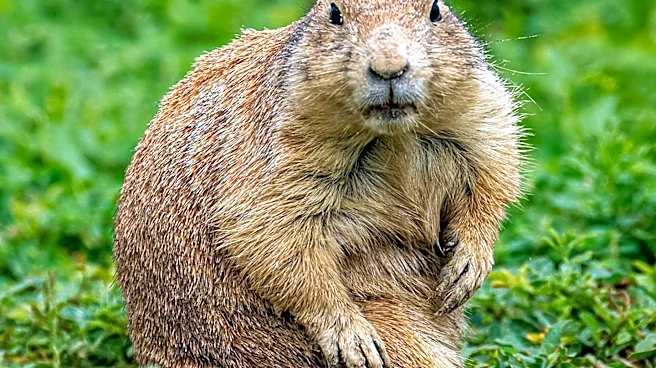
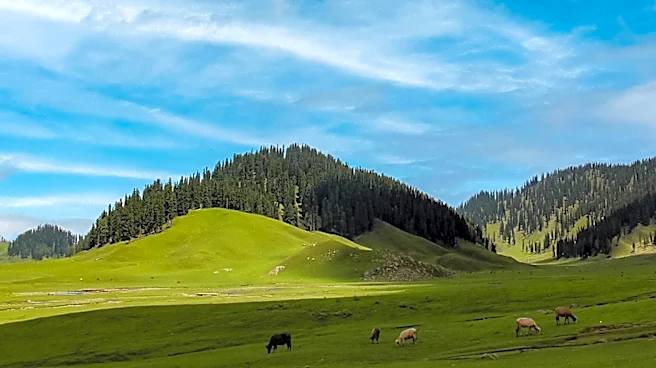
national grasslands and livestock producers, particularly in the context of the upcoming Senate Farm Bill 2.0. Senator Hoeven, serving as chairman of the Senate Agriculture Appropriations Committee and a senior member of the Senate Agriculture Committee, is pushing for the inclusion of mandatory country-of-origin labeling (MCOOL) for beef sold in the U.S. This measure aims to benefit U.S. livestock producers by allowing them to better market their products and to inform consumers about the origin of their beef. Additionally, Hoeven is advocating for improved prairie dog management within the Farm Bill. The proposed legislation seeks to prevent the unchecked spread of prairie dog habitats, limiting them to no more than 1.5 percent of any single grazing allotment and establishing a one-mile buffer along adjacent state and private lands to protect private property from colonies. The discussions also covered improving access to national grasslands, with a plan announced to revise the Travel Management Plan for the Little Missouri Grasslands to ensure section lines are open for ranchers.
Why It's Important?
The initiatives championed by Senator Hoeven are significant for the U.S. agricultural sector, particularly for livestock producers and consumers. The reintroduction of MCOOL for beef could provide a competitive advantage for domestic producers, allowing them to differentiate their products based on origin and potentially command better prices. This transparency also empowers U.S. consumers to make informed purchasing decisions, aligning with growing demands for locally sourced and clearly labeled food products. The proposed prairie dog management legislation addresses a direct economic threat to ranchers. Uncontrolled prairie dog populations can devastate grazing lands, reducing forage availability for cattle and creating hazards that can lead to livestock injuries. By limiting their spread and creating buffer zones, the bill aims to protect both federal and private lands, ensuring the sustainability of ranching operations and preventing significant financial losses for producers. Furthermore, improving access to federal lands, such as the Little Missouri Grasslands, is crucial for the operational efficiency of ranchers who rely on these areas for grazing. These efforts collectively aim to bolster the economic viability of the U.S. livestock industry, particularly in states like North Dakota where federal lands play a substantial role in local economies.
What's Next?
The proposals outlined by Senator Hoeven are currently being advanced within the Senate Farm Bill 2.0. The next step involves the legislative process, where these provisions will be debated, potentially amended, and voted upon by the Senate Agriculture Committee and then the full Senate. For MCOOL, the legislation mandates the U.S. Trade Representative (USTR), in consultation with the U.S. Department of Agriculture, to develop a World Trade Organization-compliant method for reinstating MCOOL for beef within one year of the bill's enactment. If USTR fails to do so within six months, followed by another six months for implementation, MCOOL for beef would automatically be reinstated. Regarding prairie dog management, the legislation will amend existing plans for the Dakota Prairie Grasslands. The U.S. Forest Service is also expected to continue working with Commissioner Goehring and local grazing associations as the new Travel Management Plan for the Little Missouri Grasslands is developed. Additionally, Senator Hoeven will continue to seek future funding for noxious weed control efforts on USFS lands, building on the $4.5 million grant already secured for local grazing groups.
Beyond the Headlines
The push for MCOOL and enhanced prairie dog management reflects broader tensions within the U.S. agricultural landscape, balancing economic interests with environmental concerns and international trade agreements. The debate over MCOOL highlights the ongoing challenge of reconciling domestic consumer and producer preferences for origin labeling with international trade rules, particularly those of the World Trade Organization. Past attempts at MCOOL have faced legal challenges, underscoring the complexity of implementing such policies without triggering retaliatory tariffs or trade disputes. The prairie dog management issue, while seemingly localized, touches upon the larger discourse surrounding wildlife conservation versus agricultural land use. Striking a balance that protects both ecological integrity and ranching livelihoods is a persistent challenge. These legislative efforts also underscore the significant influence of regional agricultural interests on national policy, demonstrating how specific state-level concerns can shape federal legislation. The outcome of these provisions in the Farm Bill 2.0 will not only impact North Dakota but could also set precedents for agricultural and land management policies across other states with similar challenges.