

What's Happening?
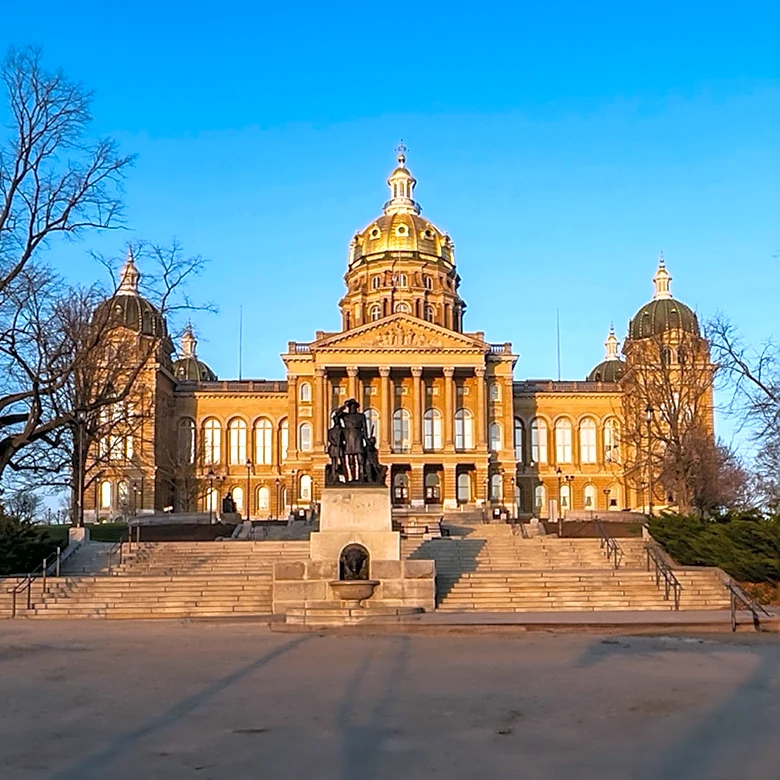
Utah Governor Spencer Cox has declared a state of emergency for San Juan and Washington Counties, effective November 6, 2026, in response to widespread flooding in southern Utah. This declaration, which will last for 30 days with potential for legislative
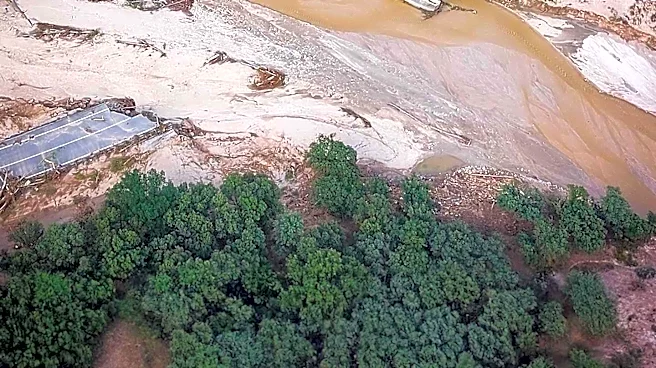
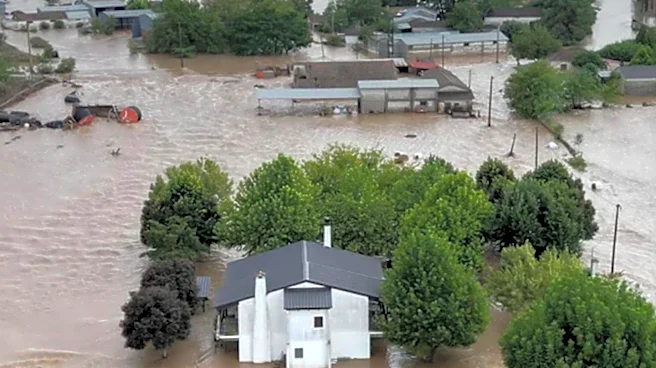
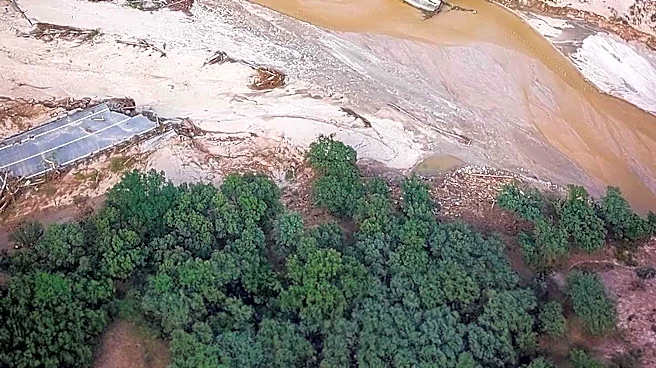
extension, enables the state to deploy additional resources, including equipment, personnel, and emergency supplies, to the affected areas. It also facilitates the allocation of state funds and opens the possibility of requesting federal assistance. The flooding has caused significant damage, particularly to roadways in San Juan County, including the washout of the Comb Wash Bridge. Communities along the San Juan River, such as Bluff, Aneth, and Montezuma Creek, have been severely impacted, with flooding also affecting other parts of the county and closing a section of Highway 191 north of Monticello. Health officials have also reported elevated E. Coli levels in Cottonwood Wash and the San Juan River, advising against water consumption and recommending personal protective equipment for those involved in cleanup efforts.
Why It's Important?
The declaration of a state of emergency is crucial for accelerating relief and recovery efforts in the flood-stricken regions of southern Utah. By unlocking state and potential federal funds, it provides essential financial support for repairing damaged infrastructure, assisting affected residents, and mitigating further risks. The extensive damage to roadways, including the Comb Wash Bridge, highlights the immediate need for infrastructure repair to restore connectivity and facilitate emergency services. Furthermore, the elevated E. Coli levels pose a significant public health risk, emphasizing the importance of official warnings and the need for proper safety measures during cleanup. The involvement of local organizations, such as Navajo Nation Chapter houses, Utah State University Blanding, and the Bluff Community Foundation, underscores the community-led efforts vital for immediate relief, complementing the state's broader response.
What's Next?
The state of emergency is initially set for 30 days, with the Utah Legislature having the authority to extend it as needed, indicating a potentially prolonged period of recovery and resource allocation. The immediate focus will be on deploying the additional resources, personnel, and emergency supplies to address the most pressing needs in San Juan and Washington Counties. Efforts will also concentrate on repairing damaged infrastructure, particularly critical roadways like the Comb Wash Bridge, to restore essential services and access. Health officials will continue to monitor water quality and provide guidance on safety precautions, especially concerning the elevated E. Coli levels. The state will likely pursue federal funding to support the extensive recovery costs, while local relief efforts are expected to continue playing a vital role in assisting affected communities.
Beyond the Headlines
The extensive flooding in southern Utah, leading to a state of emergency, underscores the increasing vulnerability of infrastructure and communities to extreme weather events. The damage to roadways and the presence of health hazards like elevated E. Coli levels highlight the multifaceted challenges posed by such disasters, extending beyond immediate property damage to long-term public health and environmental concerns. The reliance on both state and potential federal aid, alongside local community-led initiatives, illustrates the complex, multi-tiered response required for effective disaster management. This event may prompt a reevaluation of infrastructure resilience and emergency preparedness strategies in flood-prone areas, particularly in regions with significant indigenous populations like the Navajo Nation, to better protect vulnerable communities and critical resources against future climate-related impacts.