






What's Happening?
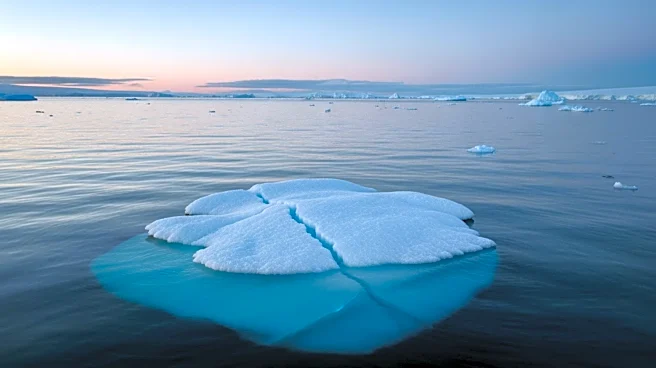
The International Union for the Conservation of Nature (IUCN) has updated its Red List to classify the emperor penguin and the Antarctic fur seal as endangered species. This change is attributed to climate change, which is causing significant habitat
loss due to warming ocean waters and melting sea ice. The emperor penguin, previously listed as 'Near Threatened,' is now considered 'Endangered' due to projections that its population will be halved by the 2080s. Satellite data indicates a 10% population decline from 2009 to 2018, equating to a loss of over 20,000 adult penguins. The Antarctic fur seal, once nearly extinct due to hunting, has seen its population decrease by more than 50% since 1999, primarily due to reduced krill availability, their main food source.
Why It's Important?
The reclassification of these species highlights the severe impact of climate change on biodiversity, particularly in polar regions. The emperor penguin and Antarctic fur seal are key indicators of the health of their ecosystems. Their decline signals broader environmental issues that could affect global biodiversity and ecological balance. The loss of sea ice, crucial for breeding and feeding, underscores the urgent need for climate action to mitigate further habitat destruction. This development also raises concerns about the future of other ice-dependent species and the cascading effects on the Antarctic food web.
What's Next?
The IUCN's findings may prompt increased conservation efforts and policy changes aimed at protecting these species and their habitats. There could be calls for stronger international cooperation to address climate change and its impacts on polar ecosystems. Conservationists may advocate for stricter regulations on greenhouse gas emissions and increased funding for research and monitoring of endangered species. The situation also highlights the need for global awareness and action to preserve biodiversity in the face of climate change.