





What's Happening?
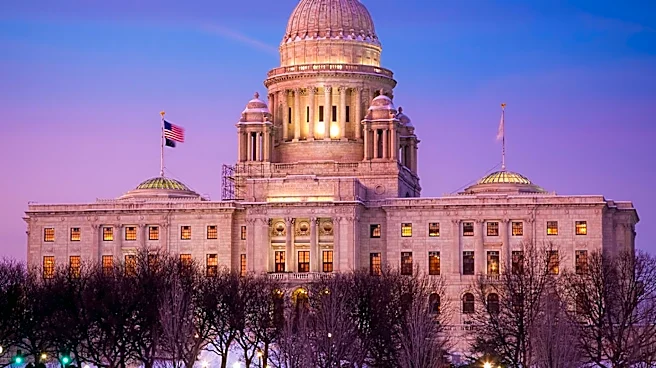
Rhode Island is experiencing a notable surge in early voting for the upcoming September 9 primary. As of eight days into the early voting period, over 10,201 in-person ballots have been cast, which is more than three times the number recorded during the same
timeframe in the 2024 primary. This figure represents less than 1.5% of the state's 691,603 active, registered voters. When including mail ballots, the combined early voter turnout reaches approximately 16,000 people, or 2% of registered voters. In 2022, 4,403 voters cast in-person early ballots, and 3,611 did so in 2024. Mail ballot submissions have also increased, with over 5,000 received this cycle compared to 3,800 in 2022 and 4,528 in 2024. Providence leads in both in-person and mail early voting, followed by East Providence for in-person and Warwick for mail ballots. Early, in-person voting is scheduled to continue until 4 p.m. on Tuesday, September 8, with mail ballots due by 8 p.m. on primary day.
Why It's Important?
The substantial increase in early voting turnout in Rhode Island could indicate a shift in voter behavior and engagement, potentially influenced by high-profile state general office and Providence mayoral primaries, as well as increased awareness of convenient voting options. This trend is significant because, historically, Rhode Island has had one of the highest rates of Election Day voting in the United States. The adoption of early in-person voting and non-emergency mail ballots, initially introduced temporarily during the 2020 pandemic-era elections and later enshrined into state law, is gradually gaining traction. Election administrators and good government advocates view this as a positive development, suggesting that these options are becoming more accepted. However, the disparity in the uptake between in-person early voting and mail ballots, with the latter not seeing the same surge, raises questions about voter confidence in mail-in voting, possibly due to past allegations of tampering, despite these claims being disproven. This could impact how future elections are conducted and perceived by the electorate.
What's Next?
The immediate focus will be on the September 9 primary day turnout to determine if the early voting surge translates into a higher overall participation rate or merely a shift in when people cast their ballots. Political analysts, such as Joe Fleming, are currently unsure if the early voting spike signals a true increase in overall turnout or just a change in timing. The continued availability of early in-person voting until September 8 and the deadline for mail ballots on primary day will be critical in shaping the final participation numbers. Candidates are actively promoting these early voting options, which may further influence voter behavior. The long-term implications will involve observing whether these newer voting methods become a permanent and widely utilized fixture in Rhode Island's electoral process, potentially leading to sustained higher engagement or a re-evaluation of voting access strategies based on the primary's outcomes.
Beyond the Headlines
The evolving voting patterns in Rhode Island highlight a broader national conversation about election accessibility, security, and voter confidence. The state's experience with early voting and mail ballots, particularly the differing rates of adoption, reflects the ongoing challenges in modernizing electoral systems while addressing public trust. The influence of past political rhetoric, such as allegations of mail ballot tampering, on voter behavior underscores the psychological dimension of election administration. This situation also touches upon the ethical responsibility of political actors to provide accurate information about voting processes. As states continue to experiment with and refine voting methods, Rhode Island's trajectory will offer valuable insights into how convenience, security concerns, and political narratives interact to shape democratic participation. The success of these initiatives could inform policy decisions in other states grappling with similar issues, aiming to balance ease of access with perceived integrity.