





What's Happening?
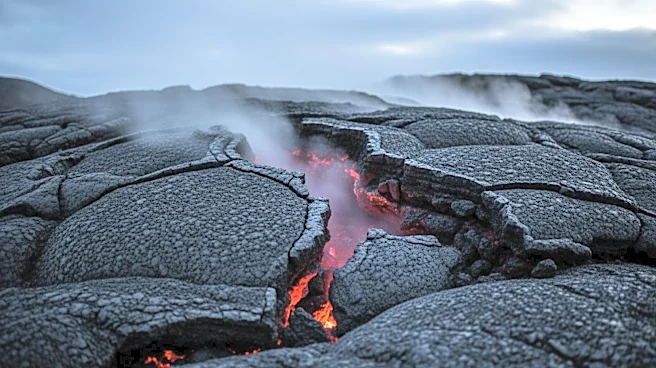
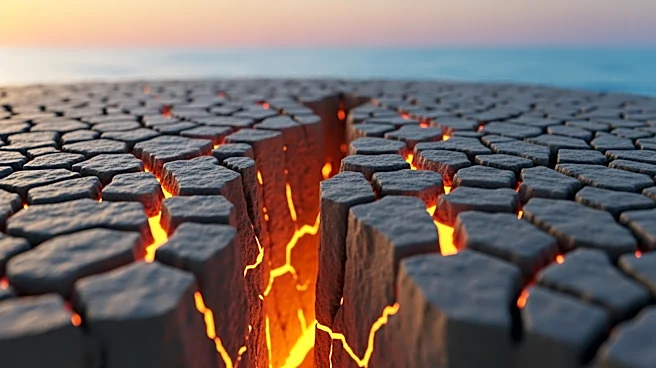
A study published in Science Advances reveals that the Methana volcano in Greece, long considered dormant, has been accumulating magma beneath the surface for tens of thousands of years. Researchers used zircon crystals to reconstruct the volcano's history,
uncovering a period of nearly 100,000 years without surface eruptions. This challenges the conventional classification of volcanoes as extinct after 10,000 years of inactivity. The study suggests that Methana's magma buildup could lead to future eruptions, highlighting the need for revised volcanic risk assessments.
Why It's Important?
This discovery has significant implications for volcanic risk management worldwide, particularly in regions with similar geological settings. The findings suggest that many volcanoes classified as extinct may still pose a threat, necessitating a reevaluation of monitoring strategies. This could impact public safety policies and emergency preparedness plans, especially in densely populated areas near dormant volcanoes. The study emphasizes the importance of understanding deep geological processes to accurately assess volcanic hazards and protect communities.