





What's Happening?
South Korean President Lee Jae Myung is advancing a strategic initiative to establish a regular shipping route through the Arctic, connecting South Korea to Europe via the Northern Sea Route (NSR) by 2030. This initiative is part of a broader effort to secure
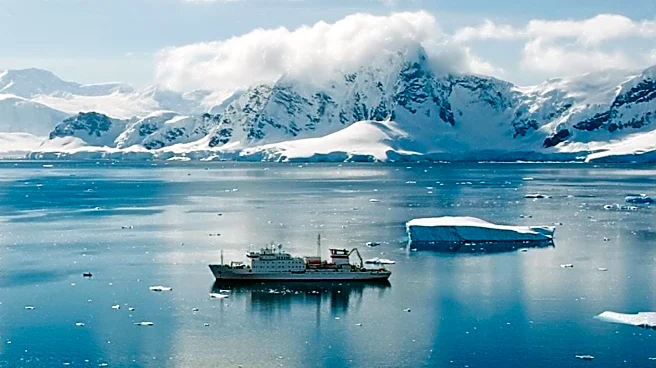
Seoul's economic and national security interests amidst rising geopolitical tensions. The Korean Polar Research Institute has dispatched an icebreaker on a fact-finding mission, and the Ministry of Oceans and Fisheries has announced plans to launch the route as a national priority. The initiative aims to reduce transport distances and costs, positioning the port of Busan as a major transshipment hub.
Why It's Important?
The Arctic shipping route represents a significant geoeconomic opportunity for South Korea, potentially reducing transport distances by 32% compared to the Suez Canal route. This could enhance South Korea's logistics security and drive economic growth. The initiative also reflects a strategic maneuver to balance relations with major powers, including Russia and China, while maintaining strong ties with the U.S. and Japan. By engaging in Arctic shipping, South Korea seeks to strengthen its position in the global supply chain and reduce dependency on traditional routes.
What's Next?
South Korea plans to accelerate the construction of new icebreakers and prepare for AI-based navigation to support the Arctic route. The government will continue diplomatic efforts to secure cooperation with Russia and other stakeholders. The success of the initiative will depend on technical and commercial outcomes, as well as the international climate. South Korea's engagement in Arctic shipping could lead to new multilateral arrangements, potentially involving North Korea, Russia, and China, to address regional security and economic challenges.