



What's Happening?
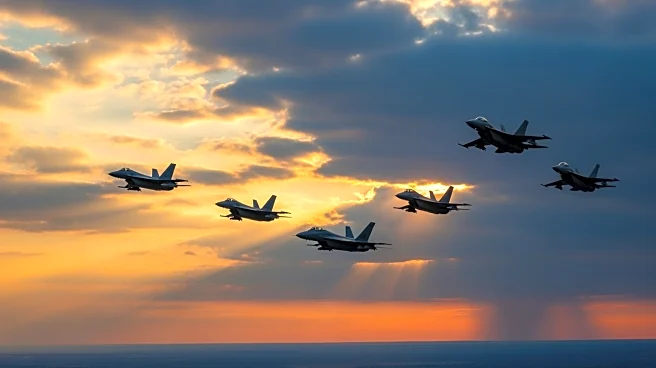
NATO member Poland has taken defensive measures by scrambling fighter jets in response to Russian aerial attacks on Ukraine. This action was confirmed by Warsaw's military, which also elevated the readiness of ground-based air defense and radar reconnaissance
systems to protect NATO territories adjacent to Ukraine. The Polish military described these actions as preventive, aimed at securing and protecting the airspace near threatened zones. The attacks by Russia targeted several regions in Ukraine, including the capital, Kyiv, where three individuals were injured. Ukraine's energy ministry reported that the strikes were aimed at the country's energy infrastructure, leading to power outages in multiple regions. The situation remains fluid as developments continue to unfold.
Why It's Important?
The escalation of military activities by Russia and the subsequent response by NATO highlight the ongoing tensions in Eastern Europe, which have significant implications for international security and stability. The involvement of NATO, particularly Poland's proactive defense measures, underscores the alliance's commitment to protecting its member states and maintaining regional security. This situation could potentially strain diplomatic relations further and impact global geopolitical dynamics. The targeting of Ukraine's energy infrastructure by Russia also raises concerns about the humanitarian impact on Ukrainian civilians, as power outages can disrupt essential services and exacerbate the hardships faced by the population.
What's Next?
As the situation develops, NATO and its member states may consider additional measures to deter further aggression and protect their territories. Diplomatic efforts could be intensified to de-escalate tensions and seek a resolution to the conflict. The international community will likely monitor the situation closely, with potential implications for economic sanctions or military support to Ukraine. The response from major stakeholders, including the European Union and the United States, will be crucial in shaping the next steps in addressing the conflict and ensuring regional stability.