









What's Happening?
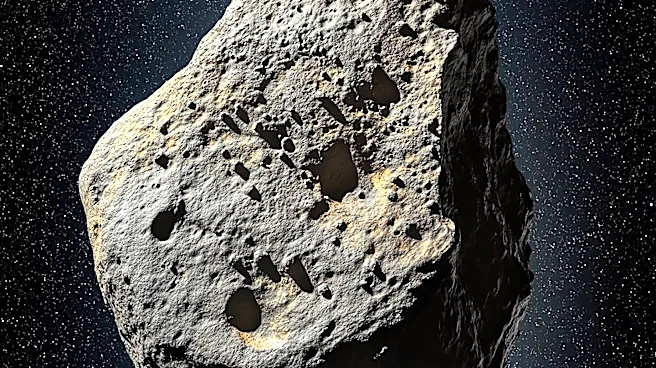
Researchers at the SETI Institute have disclosed findings from a meteorite that crashed into a Hillsborough, New Jersey home on July 16, 2024. The meteorite, composed of carbonaceous chondrite, contains prebiotic molecules and other 'building blocks of life.'
The discovery was made public two years after the event, with scientists describing the meteorite as one of the most scientifically valuable ever recovered. The fragments, initially difficult to locate, were preserved thanks to the quick actions of the homeowners. Some of these fragments will be displayed at the American Museum of Natural History in New York.
Why It's Important?
The discovery of prebiotic molecules in the meteorite fragments is significant as it provides insights into the origins of life and the chemical processes that may occur in space. This finding could influence future research in astrobiology and the study of extraterrestrial life. The meteorite's composition offers a rare opportunity to study materials that are not commonly found on Earth, potentially leading to new scientific breakthroughs. The involvement of a major institution like the American Museum of Natural History underscores the importance of this discovery to the scientific community.
What's Next?
The fragments will be further studied by scientists to understand the implications of their chemical composition. The American Museum of Natural History's involvement suggests that the meteorite will be part of ongoing research and public education efforts. This discovery may prompt additional studies into similar meteorites and their potential to harbor life-building molecules, influencing future space exploration missions and the search for life beyond Earth.