


What's Happening?
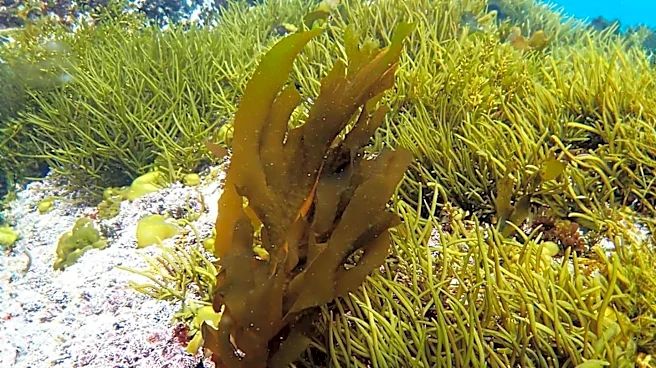
The Salish Sea, once home to thriving kelp forests, has seen a dramatic decline in these underwater ecosystems due to long-term ocean warming. Historical data and recent surveys by researchers, including Brian Timmer, reveal that the kelp forests have
largely disappeared since the late 1970s, coinciding with a significant shift in Pacific Ocean climate. The loss of kelp forests has impacted local communities, such as the Penelakut Tribe, who rely on these ecosystems for food and cultural practices. Restoration efforts are underway, with scientists replanting kelp to help strengthen coastal ecosystems.
Why It's Important?
Kelp forests are crucial for marine biodiversity, serving as nurseries and feeding grounds for various species, including economically important fish like salmon and rockfish. Their decline threatens the ecological balance and the livelihoods of communities dependent on marine resources. The situation highlights the broader issue of climate change and its impact on marine environments, emphasizing the need for sustainable management and conservation efforts. The loss of kelp forests also serves as a warning of the potential long-term effects of unchecked global warming on oceanic ecosystems.
What's Next?
Restoration projects aim to rebuild kelp forests, but these efforts alone cannot reverse the effects of ocean warming. Continued research and monitoring are essential to understand the dynamics of these ecosystems and develop effective conservation strategies. Policymakers and environmental groups may need to advocate for stronger climate action to mitigate further warming and protect marine habitats. The success of restoration efforts could provide valuable insights for similar initiatives worldwide.