



What's Happening?
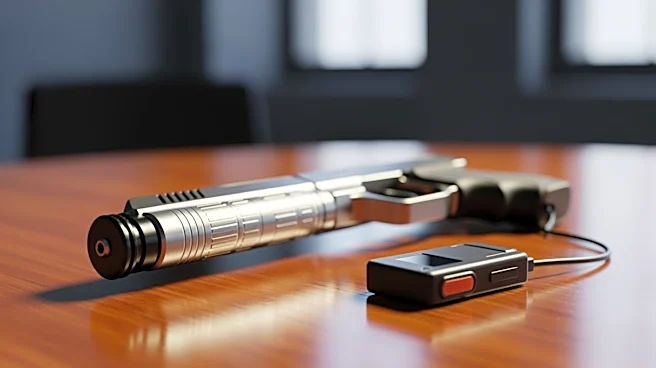
Suffolk County sheriff's deputies have introduced a new technology, known as StarChase, which involves high-tech guns mounted on police car bumpers to fire GPS darts onto vehicles during high-speed chases. This system allows officers to track suspects'
real-time location, speed, and direction without engaging in dangerous pursuits. The technology has already been used successfully to apprehend a drunk driver who refused to stop. The program, currently piloted by the department's DWI enforcement unit, is the first of its kind in the county. Sheriff Errol Toulon Jr. emphasized the safety benefits, noting that the technology helps avoid risky chases that endanger officers and the public. The system boasts an 85% success rate across various offenses, including drunk driving, stolen vehicles, human trafficking, and narcotics. The initiative follows similar implementations in New York City and Old Westbury, Nassau County.
Why It's Important?
The introduction of GPS dart guns in Suffolk County represents a significant advancement in law enforcement technology, aiming to enhance public safety by reducing the need for high-speed chases. These pursuits often pose significant risks to both officers and civilians, leading to potential accidents and injuries. By allowing officers to track suspects remotely, the technology minimizes these dangers, potentially saving lives and reducing property damage. The high success rate of the system suggests it could become a valuable tool in addressing various criminal activities, thereby improving overall community safety. Additionally, the program's success could encourage broader adoption across other jurisdictions, setting a precedent for modernizing police tactics nationwide.
What's Next?
As the pilot program progresses, Suffolk County may consider expanding the use of GPS dart guns beyond the DWI enforcement unit to other areas of law enforcement. The technology's effectiveness in safely apprehending suspects could lead to its implementation across the entire county and potentially influence other regions to adopt similar measures. Continuous evaluation of the program's outcomes will be crucial in determining its long-term viability and potential for broader application. Stakeholders, including law enforcement agencies and community leaders, will likely monitor the program closely to assess its impact on public safety and crime rates.