








What's Happening?
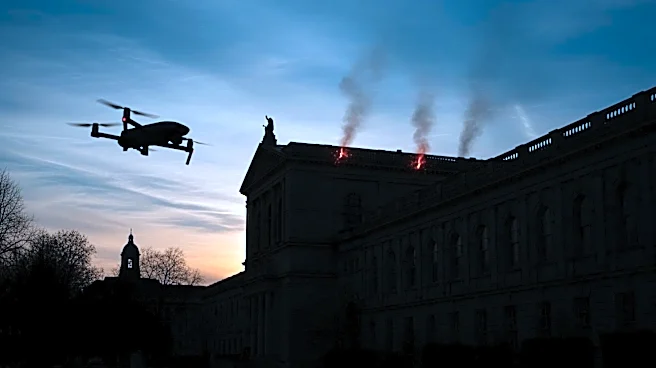
A historic museum in Sevastopol, located in Russia-annexed Crimea, was damaged by Ukrainian drones, according to local authorities. The museum, which commemorates the 1853-1856 Crimea War, had its roof hit, though details on the extent of the damage or casualties
were not provided. This incident is part of a series of drone attacks that have led to the reduction of nighttime train schedules in Crimea, as announced by the peninsula's Russian-installed governor, Sergei Aksyonov. The attacks have also contributed to a fuel shortage in the region, coinciding with the start of the holiday season. Ukrainian President Volodymyr Zelensky's recent proposal for direct talks with Russian President Vladimir Putin was rejected, with the Kremlin accusing Ukraine of undermining peace efforts.
Why It's Important?
The drone attacks and subsequent damage to infrastructure in Crimea highlight the ongoing tensions between Ukraine and Russia, particularly in contested regions. The disruption of train services and fuel shortages could have significant economic and social impacts on the local population, affecting daily life and tourism. The rejection of peace talks by Russia suggests a continued stalemate in diplomatic efforts, potentially prolonging the conflict. This situation underscores the broader geopolitical struggle in the region, with implications for international relations and security dynamics.
What's Next?
The continuation of drone attacks and military engagements in Crimea and surrounding areas may lead to further escalation of tensions. Russia's response to these attacks, including potential military or economic measures, will be closely watched by international observers. The impact on energy infrastructure, particularly in oil-producing regions, could affect global oil markets and economic stability. Additionally, the international community may increase diplomatic efforts to mediate the conflict, though the path to resolution remains uncertain.
Beyond the Headlines
The damage to the Crimea War museum, a symbol of historical conflict, adds a cultural dimension to the ongoing hostilities. The targeting of such sites may be seen as an attempt to undermine cultural heritage and morale. The broader implications of these attacks include potential shifts in regional alliances and the role of international organizations in conflict resolution. The situation also raises questions about the effectiveness of current diplomatic strategies and the potential need for new approaches to peacebuilding.