



What's Happening?
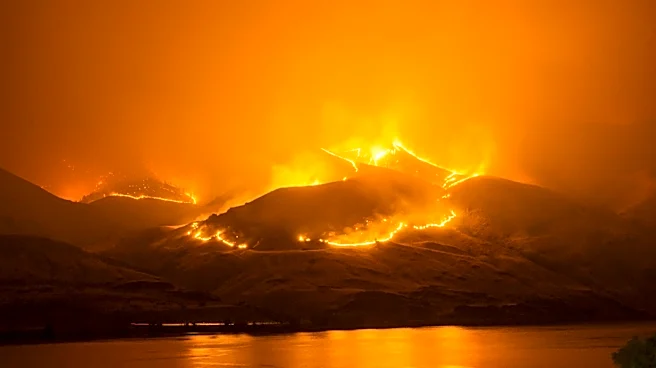
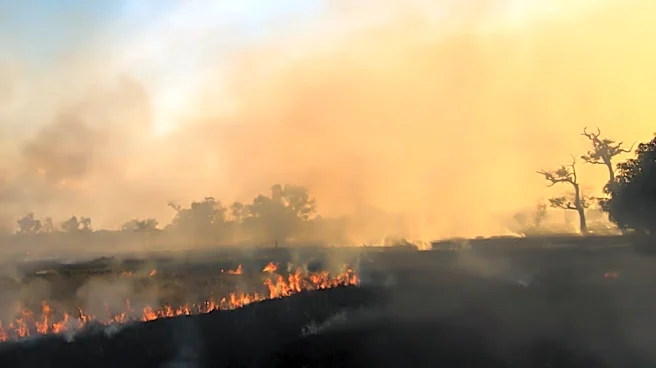
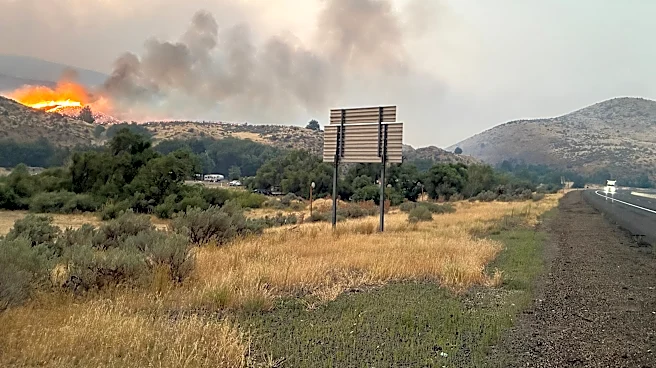
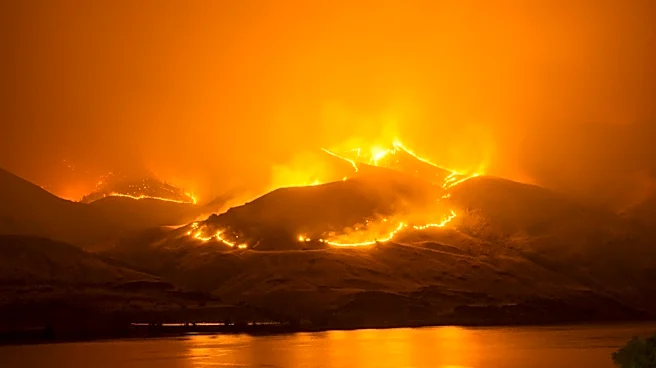
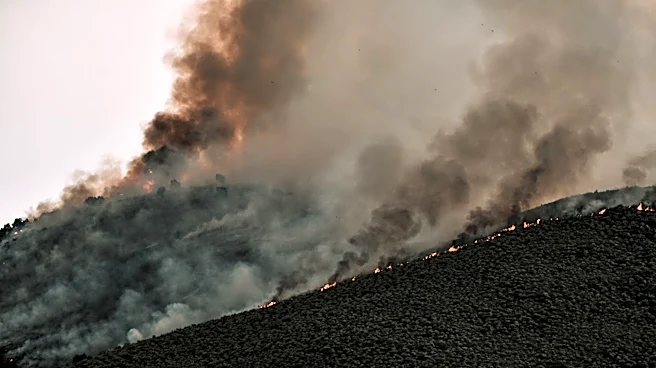
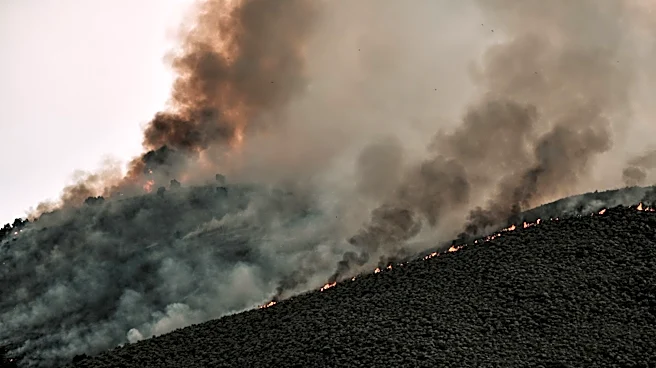
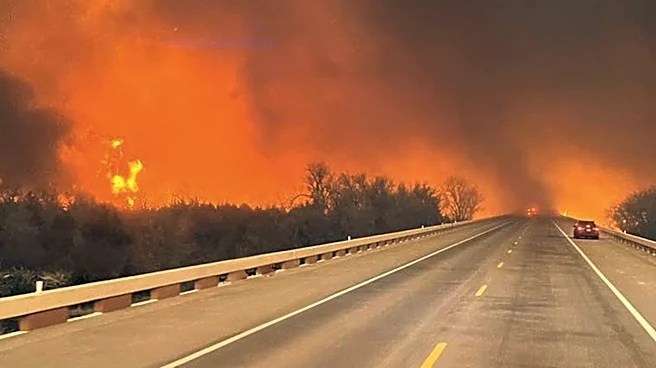
Oregon is experiencing a severe wildfire season, with over a million acres already burned across central and eastern regions. Thirty-four major fires are currently active, primarily on public rangelands from Bend to the Idaho state line. The situation
is exacerbated by dense smoke affecting air quality in nearby areas, including Boise, Idaho. The fires, ignited by a recent lightning storm, have forced thousands to evacuate, impacting small towns and ranchers who are struggling to protect their cattle. The fires are occurring amidst significant cuts in federal funding and staffing for public lands agencies, which have reduced the capacity for wildfire prevention and response. Additionally, climate change is contributing to hotter and drier conditions, further complicating firefighting efforts.
Why It's Important?
The ongoing wildfires in Oregon highlight the intersection of environmental, economic, and policy challenges. The fires threaten local economies, particularly in rural areas dependent on agriculture and ranching. The reduction in federal resources for wildfire management, coupled with climate change, underscores the need for comprehensive policy responses to address both immediate and long-term environmental risks. The situation also raises concerns about public health due to deteriorating air quality and the potential for further displacement of communities. The fires serve as a critical reminder of the broader impacts of climate change and the importance of sustainable land management practices.
What's Next?
As the fire season progresses, Oregon may face additional challenges if new fires ignite, given the current strain on firefighting resources. The state and federal agencies will need to coordinate closely to manage the existing fires and prepare for potential new outbreaks. There may be increased calls for policy changes to enhance funding and staffing for wildfire prevention and response. Additionally, the situation could prompt further discussions on climate change mitigation strategies and the need for resilient infrastructure to support affected communities.