





What's Happening?
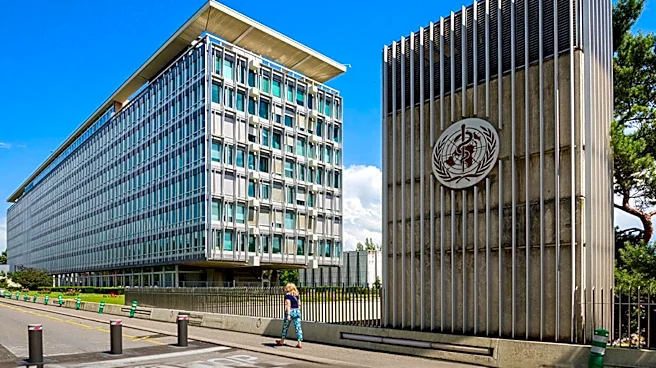
The World Health Organization (WHO) has identified an 'infodemic' as a significant obstacle during health crises, particularly evident during the COVID-19 pandemic. An infodemic is characterized by an overwhelming amount of information, both accurate
and inaccurate, that circulates through public channels. This phenomenon makes it difficult for the public to understand and respond effectively to health issues, often leading to confusion and a breakdown of trust. During the COVID-19 pandemic, misinformation regarding the virus and vaccines spread rapidly, exacerbating the challenges faced by public health efforts. The WHO emphasizes that combating an infodemic requires concerted efforts, including rigorous fact-checking, promoting health literacy among the general population, and encouraging responsible dissemination of information by media outlets and educational institutions. This overabundance of information can obscure reliable guidance, making it harder for individuals to make informed decisions about their health and safety.
Why It's Important?
The presence of an infodemic during a health crisis like the COVID-19 pandemic has profound implications for public health and societal well-being in the U.S. and globally. When accurate information is drowned out by a flood of misinformation, public trust in health authorities and scientific institutions can erode. This erosion of trust can lead to lower vaccination rates, non-compliance with public health measures, and the adoption of unproven or harmful remedies, directly impacting the effectiveness of disease control efforts. Economically, an infodemic can cause widespread panic, disrupt markets, and lead to irrational consumer behavior, further destabilizing an already fragile economy during a crisis. Socially, it can fuel division, create anxiety, and undermine community cohesion. For healthcare systems, it adds an extra layer of complexity, as providers must not only manage the disease but also counter pervasive false narratives. Ultimately, an unchecked infodemic can prolong health crises, increase morbidity and mortality, and impose significant long-term costs on society.
What's Next?
Addressing the challenges posed by infodemics will require ongoing and evolving strategies from public health organizations, governments, and technology companies. Future efforts are likely to focus on strengthening digital literacy programs to equip individuals with the skills to critically evaluate online information. Collaboration between health authorities and social media platforms will be crucial to develop more effective mechanisms for identifying and flagging misinformation, while also ensuring that legitimate public health messages reach a wider audience. Investment in rapid response fact-checking initiatives, potentially leveraging artificial intelligence, could help counter false narratives in real-time. Additionally, there may be a push for clearer and more consistent communication from official sources to minimize ambiguity and reduce the vacuum that misinformation often fills. Educational institutions are also expected to play a larger role in integrating media literacy into curricula, preparing future generations to navigate complex information landscapes during crises.
Beyond the Headlines
The concept of an infodemic extends beyond immediate health crises, highlighting deeper societal vulnerabilities in the digital age. It underscores the ethical responsibility of information gatekeepers, including social media companies and news organizations, to prioritize accuracy and public well-being over engagement metrics. The proliferation of misinformation can exacerbate existing social inequalities, as vulnerable populations may have less access to reliable information or be more susceptible to deceptive content. Legally, the challenge lies in balancing freedom of speech with the need to protect public health, leading to complex debates about content moderation and censorship. Culturally, an infodemic reflects a broader crisis of truth and shared reality, where objective facts are increasingly contested. This phenomenon could lead to long-term shifts in how societies consume and trust information, potentially fostering a more skeptical and fragmented public discourse, with implications for democratic processes and collective action on critical issues.