




What's Happening?
Recent developments in U.S. public education have seen a significant increase in the integration of religious elements, particularly in conservative states. This shift follows Supreme Court rulings that have relaxed previous restrictions on religious activities
in schools. Notably, the 2022 Kennedy v. Bremerton School District case allowed a football coach to pray publicly, which has emboldened policymakers to incorporate religious practices into the school day. New laws require public schools to display the Ten Commandments, integrate Bible verses into curriculums, and allow students to leave campus for Bible study. These changes are met with mixed reactions, with some viewing them as a positive reinforcement of moral values, while others express concern over the potential exclusion of non-Christian students and the undermining of secular education.
Why It's Important?
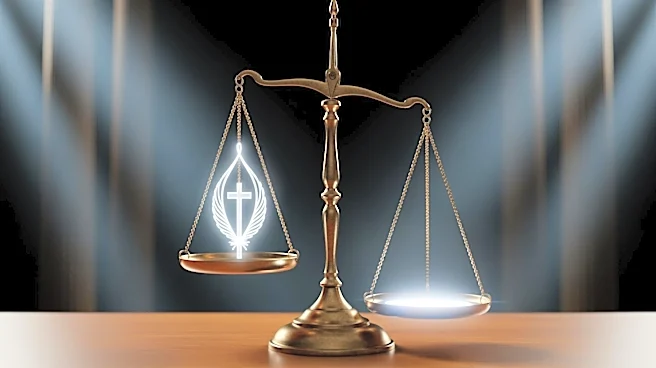
The integration of religion into public education has significant implications for the U.S. educational system and society at large. It challenges the traditional separation of church and state, potentially altering the educational landscape by prioritizing certain religious beliefs over others. This shift could impact the inclusivity of public schools, as students from diverse religious backgrounds may feel marginalized. Additionally, it raises questions about the role of public education in promoting specific moral values and the potential for increased polarization in communities. The changes could also influence public policy, as states navigate the balance between religious freedom and secular education.
What's Next?
As these policies continue to unfold, legal challenges are likely, particularly concerning the constitutionality of mandating religious displays and activities in public schools. The Supreme Court may be called upon to further clarify the limits of religious integration in education. Stakeholders, including educators, parents, and civil rights organizations, will play a crucial role in shaping the discourse and advocating for policies that reflect diverse perspectives. The ongoing debate may lead to new legislative efforts aimed at either expanding or restricting religious activities in schools, depending on the political climate and public opinion.
Beyond the Headlines
The deeper implications of these developments include potential shifts in cultural norms and values within communities. As religious elements become more prominent in public education, there may be a resurgence of traditional values, influencing societal attitudes towards issues such as morality and ethics. This could also affect the future of educational content, with increased emphasis on religious texts and teachings. Furthermore, the integration of religion in schools may prompt discussions about the role of education in shaping identity and community cohesion, highlighting the complex interplay between religion, education, and society.