




What's Happening?
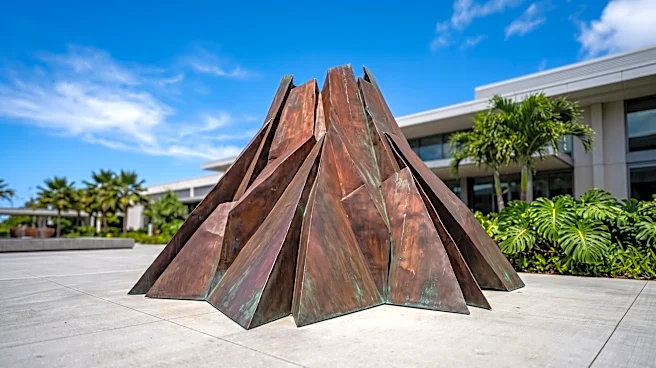
The Commissioners at the Hawaii State Foundation on Culture and the Arts are currently evaluating options for the relocation of the iconic metal volcano sculpture situated in front of Aloha Stadium. This sculpture, created by the late local artist Satoru
Abe in 1981, has been a prominent feature at the stadium's box office for 45 years. The necessity for its relocation stems from its current position, which obstructs planned roadways and infrastructure for the new Aloha Stadium Entertainment District. The State Foundation on Culture and the Arts currently lacks the necessary funds to cover the estimated $600,000 cost for moving the artwork. As a result, the board is exploring various funding avenues, including utilizing a special fund or requesting additional appropriations from state lawmakers. Karen Ewald, the executive director, has been tasked with presenting this request to the Legislature during the 2027 session.
Why It's Important?
This situation highlights the challenges faced by cultural institutions in preserving public art amidst urban development projects. The Aloha Stadium volcano sculpture is not merely a decorative piece but a significant work by a local artist, deeply integrated into the cultural landscape of Hawaii. Its potential relocation underscores the tension between infrastructure development and the preservation of artistic heritage. The financial burden of moving such a large-scale artwork, estimated at $600,000, reveals the often-underestimated costs associated with maintaining public art collections. The decision on how to fund this relocation will set a precedent for future projects involving public art and infrastructure in Hawaii, potentially influencing how state funds are allocated for cultural preservation versus development. It also brings to light the ongoing need for dedicated funding mechanisms for the maintenance and relocation of public art.
What's Next?
The Hawaii State Foundation on Culture and the Arts board will continue to explore funding options for the relocation of the volcano sculpture. A key next step involves Executive Director Karen Ewald presenting the funding request to the Hawaii Legislature during its 2027 session. This legislative appeal will be crucial in determining whether state funds will be allocated for the project. Concurrently, the board will likely assess the feasibility and timeline for accessing any special funds that might be available. The outcome of these discussions and the legislative decision will dictate the future of the sculpture, including its new location and the commencement of the relocation process. The community, particularly art enthusiasts and those invested in local heritage, will be closely watching these developments.
Beyond the Headlines
The predicament of the Aloha Stadium volcano sculpture extends beyond a simple relocation issue; it touches upon the broader societal value placed on public art and the mechanisms for its long-term stewardship. The fact that a significant piece of local art is at risk due to infrastructure development, and that its relocation requires substantial public funding, prompts a re-evaluation of urban planning processes. It raises questions about how early cultural assets are considered in development plans and whether sufficient provisions are made for their preservation. This incident could spark a wider dialogue about integrating cultural heritage into urban development frameworks, potentially leading to policy changes that mandate early assessment and funding for the protection of public art. It also highlights the role of public institutions in advocating for and securing the future of artistic legacies.