
What's Happening?
Kansas City, Missouri, has initiated a pilot program to integrate artificial intelligence (AI) and drone technology into its disaster response efforts. The initiative aims to improve the speed and safety
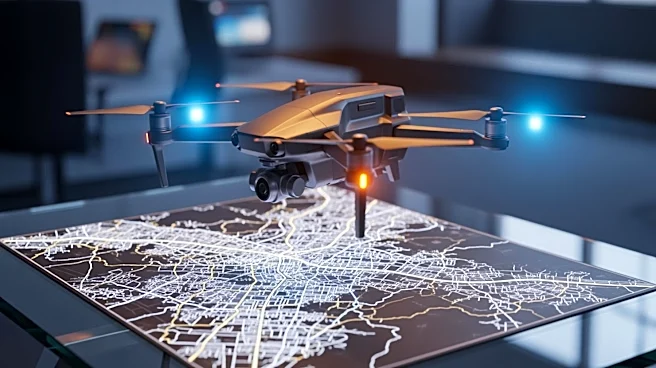
of damage assessments following natural disasters. The pilot, conducted on March 23, involved using drones to capture aerial images of affected areas, which were then processed using AI to assess damage. This approach is intended to accelerate the Federal Emergency Management Agency (FEMA) preliminary damage assessment process. The project is a collaboration between Kansas City's digital team and Bellwether, a group of technologists from Google's Moonshot Factory, in partnership with the Defense Innovation Unit. The pilot demonstrated significant time savings, with data processing completed in about 23 minutes, compared to traditional methods. The technology was found to be 96% accurate in assessing damage, offering a comprehensive view that surpasses street-level assessments.
Why It's Important?
The integration of AI and drone technology in disaster response represents a significant advancement in emergency management. By reducing the time required for damage assessments, the city can expedite the process of accessing aid and restoring affected areas. This technological approach not only enhances safety by minimizing human exposure to hazardous conditions but also ensures a more thorough evaluation of damage, potentially leading to more effective recovery efforts. The success of this pilot could serve as a model for other cities, promoting the adoption of innovative technologies in disaster management. The initiative underscores the potential for AI to transform traditional processes, making them more efficient and responsive to the needs of communities affected by natural disasters.
What's Next?
Kansas City plans to apply for a grant to further develop AI-powered government innovations, focusing on making infrastructure more resilient to disasters. The pilot's success may lead to broader implementation across the city and potentially other municipalities. Officials aim to create a playbook for rapid post-disaster damage assessment that can be shared with other cities. The ongoing development by Bellwether seeks to offer these capabilities to municipalities nationwide, even those without existing drone programs. This initiative could significantly influence future disaster planning and response strategies, enhancing preparedness and resilience against natural disasters.