

What's Happening?
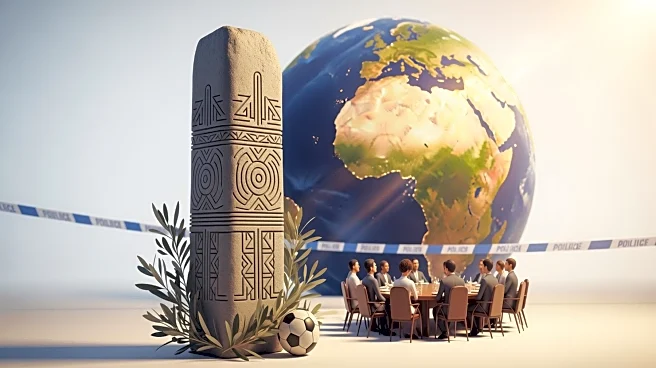
Egypt's President Abdel-Fattah el-Sissi has reiterated his call for structural changes in the United Nations Security Council to provide Africa with a more significant role in global decision-making. This appeal was made during a conference of the Russia-Africa
partnership in Cairo, attended by Russian Foreign Minister Sergey Lavrov and representatives from over 50 African countries. El-Sissi emphasized the need for a 'more pluralistic' world order, highlighting Africa's human, economic, political, and demographic significance. The African Union has been advocating for at least two permanent seats with veto powers and five non-permanent seats for Africa in the Security Council since 2005. However, African nations have yet to agree on a mechanism for selecting their potential permanent representatives.
Why It's Important?
The call for reforming the UN Security Council is significant as it addresses the longstanding issue of Africa's underrepresentation in global governance structures. Granting Africa a larger role could lead to more equitable decision-making that reflects the continent's interests and challenges. This move could potentially enhance peace and stability in Africa, which has been plagued by conflicts for decades. The proposed reforms could also influence international financial institutions to ensure fair representation for Africa, potentially impacting global economic policies and aid distribution. The involvement of Russia in this dialogue highlights the geopolitical interests in Africa, as Russia seeks to strengthen its ties with African nations amid its political and economic isolation by Western countries.
What's Next?
The next steps involve continued coordination among African nations and their allies to promote the proposed reforms in various multilateral forums. The action plan for cooperation between Russia and Africa for 2026-2029, which is currently being developed, will be presented at the upcoming Russia-Africa summit. This plan may outline specific strategies for achieving the desired reforms in the UN Security Council. Additionally, the ongoing dialogue may lead to increased military and economic cooperation between Russia and African countries, as Russia aims to expand its influence on the continent.