





What's Happening?
PETA scientists are actively working to accelerate the shift from animal-derived antibodies to animal-free alternatives in scientific research. Antibodies, crucial tools in nearly every research facility globally, are traditionally produced by injecting
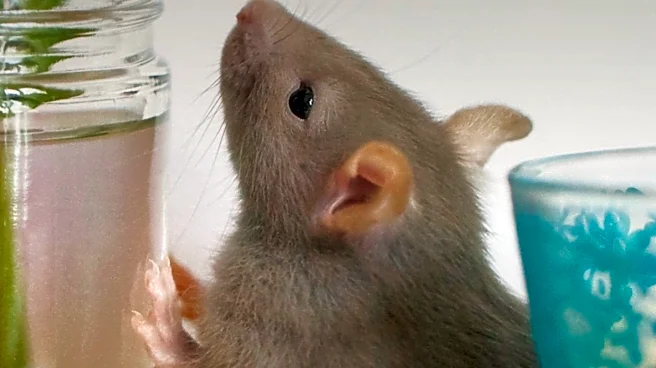
foreign substances into millions of animals—including rabbits, mice, rats, goats, sheep, llamas, cows, and horses—and then repeatedly bleeding them. The ascites method, particularly painful for mice, involves tumor development causing severe abdominal distension. PETA highlights that animals in antibody-production facilities often endure neglect and live in bleak, unsanitary conditions. Furthermore, animal-derived antibodies suffer from batch-to-batch variability, contributing to research irreproducibility. PETA advocates for recombinant antibodies, which are sequence-defined, infinitely reproducible, and offer superior scientific advantages like high affinity, specificity, and faster generation time, making them a humane and scientifically advanced alternative.
Why It's Important?
The reliance on animal-derived antibodies in U.S. research raises significant ethical concerns regarding animal welfare and scientific validity. The documented suffering of animals in these production facilities, coupled with the scientific limitations of animal-derived antibodies, underscores the urgent need for a transition. The variability of animal-derived antibodies can lead to unreliable research results, wasted resources, and a lack of reproducibility, which is a major issue in scientific integrity. By promoting animal-free recombinant antibodies, PETA aims to enhance research quality, reduce animal suffering, and advance scientific methodology. This shift aligns with broader efforts to develop more humane and effective research practices, potentially leading to more robust and reliable scientific discoveries across various fields, from medicine to biotechnology.
What's Next?
PETA scientists are engaged in several initiatives to promote animal-free antibodies. The PETA Science Consortium International e.V. has funded research to develop these superior alternatives and has partnered with organizations like the National Toxicology Program Interagency Center for the Evaluation of Alternative Toxicological Methods (NICEATM) to outline a plan for a large-scale transition. They also launched the Recombinant Antibody Challenge, offering grants for free catalog recombinant antibodies for in vitro research and testing. PETA continues to hold companies accountable for animal cruelty in antibody production. The next steps involve continued advocacy to urge universities, scientific associations, and regulatory agencies to develop, fund, and purchase animal-free antibodies, fostering a widespread adoption of these scientifically superior and ethical methods.
Beyond the Headlines
The push for animal-free antibodies represents a broader movement towards ethical and scientifically rigorous research practices. It challenges the long-standing paradigm of using animals as mere tools in scientific endeavors, advocating for a more compassionate and advanced approach. This transition has implications beyond animal welfare, potentially revolutionizing research by providing more standardized, reliable, and reproducible reagents. The ethical imperative to reduce animal suffering in laboratories is increasingly gaining traction, driven by scientific advancements that offer viable alternatives. This shift could also influence public perception of scientific research, fostering greater trust and support for science that prioritizes both discovery and ethical considerations. Ultimately, the widespread adoption of animal-free antibodies could mark a significant step towards a more humane and efficient scientific enterprise.