
What's Happening?
San Diego Gas & Electric (SDG&E) has begun notifying customers in San Diego County about possible public safety power shutoffs (PSPS) due to an anticipated heat wave. The extreme heat, expected from Friday
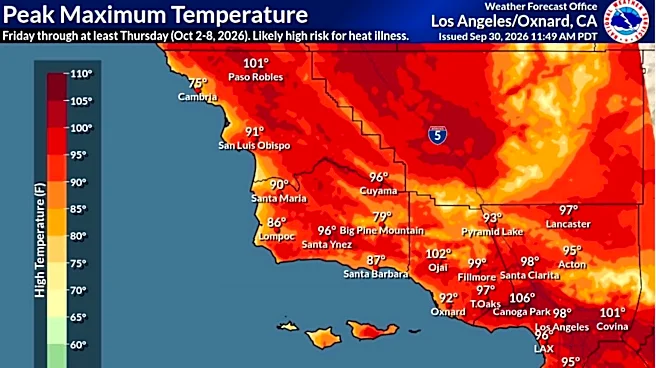
through October 8, is projected to increase energy demand on the grid and elevate the risk of wildfires. The potential power shutoffs could affect 35,006 customers between October 2 at 5 a.m. and October 5 at 6 p.m. Communities that may be impacted include Alpine, Boulevard, Campo, Descanso, El Cajon, Fallbrook, Jamul, Julian, Lakeside, Pala, Pauma Valley, Pine Valley, Poway, Ramona, Ranchita, Santa Ysabel, Valley Center, and Warner Springs. Several tribal communities, such as Barona, Campo, Cuyapaipe, Jamul Indian Village, La Jolla, La Posta, Los Coyotes, Manzanita, Mesa Grande, Pala, Pauma and Yuima, Rincon, San Pasqual, Santa Ysabel, Sycuan, and Viejas Reservations, are also on the list of potential impacts. SDG&E is closely monitoring the conditions and has positioned crews and resources to respond as needed, urging customers in high fire-risk areas to prepare for potential outages and extreme temperatures.
Why It's Important?
The potential power shutoffs in San Diego County highlight the critical challenges faced by utility companies in balancing energy supply with public safety during extreme weather events. For residents and businesses in the affected areas, these shutoffs can lead to significant disruptions and financial losses. For instance, a local business owner in Ramona, Victoria Bradley, recounted losing approximately $25,000 in frozen goods during a previous power shutoff. Such incidents underscore the economic vulnerability of small businesses to grid instability and the necessity for proactive measures like renting generators. The situation also emphasizes the broader implications of climate change, as more frequent and intense heat waves strain existing infrastructure and increase wildfire risks, prompting utilities to implement preventative but disruptive measures. The need for reliable power is paramount for daily life, economic activity, and public health, especially for vulnerable populations during extreme heat.
What's Next?
SDG&E will continue to monitor weather conditions and energy demand throughout the heat wave. Customers in the identified areas should prepare for potential power outages by reviewing SDG&E's tips for public safety power shutoffs. This includes having emergency kits ready, charging electronic devices, and making arrangements for perishable goods. Businesses, particularly those reliant on refrigeration, may need to implement contingency plans, such as renting generators or securing alternative storage solutions, to mitigate potential losses. The utility company's ongoing communication with customers will be crucial for providing real-time updates on the status of potential shutoffs. The long-term implications may involve further investments in grid modernization and resilience to better withstand extreme weather events and reduce the frequency and duration of such preventative power shutoffs.
Beyond the Headlines
The recurring issue of public safety power shutoffs in California, driven by wildfire concerns and extreme weather, points to a deeper societal challenge regarding infrastructure resilience and climate adaptation. While intended to prevent catastrophic wildfires, these shutoffs disproportionately affect rural communities and small businesses, raising questions about equitable access to reliable power and the economic burden placed on individuals. The situation also highlights the tension between environmental protection and economic stability, as utilities navigate regulatory pressures to prevent fires while minimizing disruption. This ongoing challenge could accelerate the adoption of decentralized energy solutions, such as microgrids and home battery storage, as communities seek greater energy independence and resilience against grid vulnerabilities. Furthermore, it underscores the need for comprehensive policy discussions on how to fund and implement infrastructure upgrades that can withstand the impacts of a changing climate.